
Has your foot pain improved then come right back?
If you’ve tried stretching, rest, shoe changes, orthotics, steroid injections, or physical therapy—but your heel pain or Achilles pain keeps returning—you’re not alone. We see this pattern frequently in patients dealing with chronic foot and ankle pain.
In many cases, ongoing pain is a sign that the tissue has not fully healed, especially when symptoms have been present for months.
At Family Foot & Ankle Clinic, we are now offering EPAT (Extracorporeal Pulse Activation Technology), also known as shockwave therapy, as a non-surgical treatment option for chronic foot and ankle conditions.
What Is EPAT/Shockwave Therapy?
EPAT uses acoustic pressure waves to stimulate healing in damaged or chronically inflamed tissue.
The goals of treatment are to:
- Improve blood flow to the injured area
- Stimulate the body’s healing response
- Reduce chronic pain
- Help damaged tissue recover more effectively
- Help break down chronic scar tissue and adhesions that may contribute to ongoing pain and stiffness
EPAT/shockwave therapy is FDA-cleared for the treatment of acute and chronic musculoskeletal pain.
Unlike surgery, treatment is performed in the office and does not require anesthesia or downtime afterward.
What Conditions Can EPAT Help Treat?
Shockwave therapy is commonly used for conditions such as:
- Plantar fasciitis
- Chronic heel pain
- Achilles tendonitis/tendinosis
- Neuroma pain
- Chronic tendon injuries
- Other overuse-related foot and ankle conditions
Many patients who consider EPAT have been dealing with symptoms for months and feel frustrated that the pain keeps returning with activity.
Why Chronic Foot Pain Often Keeps Coming Back
One of the biggest frustrations with chronic heel or tendon pain is that symptoms may temporarily improve—but then flare back up again with walking, exercise, work activity, or time on your feet.
In many chronic cases, the problem is no longer just inflammation. Over time, the tissues can become thickened, abnormal, and less able to heal normally on their own or with basic treatments aimed only at reducing inflammation and temporary pain relief.
That’s often when additional treatment options like EPAT/shockwave therapy may be considered.
What Does Treatment Feel Like?
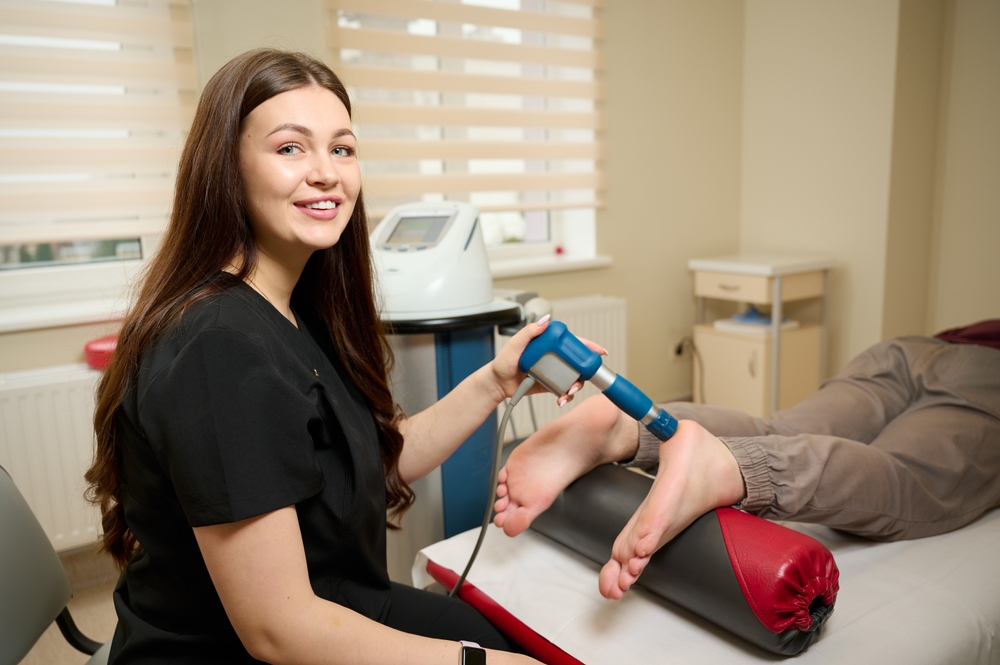
During treatment, a handheld device is applied directly to the painful area. Most patients describe the sensation as a tapping or pulsing feeling.
Treatment sessions are relatively quick and performed in the office. Most treatment plans involve a series of approximately 6 treatments, depending on the condition being treated and how long symptoms have been present.
Because EPAT works by stimulating tissue healing, improvement is typically gradual rather than immediate. Many patients begin noticing improvement over several weeks, with continued healing and results often occurring over approximately 8–12 weeks as the tissue responds and remodels.
Most patients are able to return to normal daily activity immediately after each treatment without downtime.
Benefits of EPAT/Shockwave Therapy
Some of the reasons patients are interested in EPAT therapy include:
- FDA-cleared technology
- Evidence-based treatment
- Non-invasive / non-surgical
- No anesthesia required
- No downtime after treatment
- Performed in the office
When Should You Schedule an Evaluation?
It may be time for a more detailed evaluation if:
- Heel pain keeps returning
- Achilles or other foot pain worsens with activity
- Pain has lasted for several months
- Walking or exercise is becoming more limited
- Conservative treatments have not provided lasting relief
The first step is determining the actual cause of pain and whether EPAT/shockwave therapy may be an appropriate treatment option for your condition.
Schedule an Appointment
If you have been dealing with ongoing heel pain, Achilles pain, neuroma pain, or chronic foot and ankle discomfort, our office would be happy to discuss whether EPAT/shockwave therapy may be right for you.