
My Child Has Flat Feet — Do We Need to Do Something?
Flat feet in children are one of the most common concerns parents bring to a podiatry visit—and in the majority of cases, the honest answer is: probably not. Many young children have flat feet, and most flexible flat feet cause no pain, functional limitation, or long-term problems. As children grow, the arch often becomes more apparent as the foot matures, the plantar fat pad thins, and the muscles, tendons, and ligaments strengthen. This process typically occurs throughout early childhood and may continue into later childhood. Treating every flat foot in every child would mean treating a large percentage of the pediatric population for a normal developmental finding.
That said, not all flat feet are the same, and not all of them should be left alone. Symptomatic flat feet that cause pain, fatigue, or activity limitation, flat feet that are worsening rather than improving, and certain structural types of flatfoot do benefit from evaluation and treatment. The challenge is knowing which is which. Our podiatrists provide that assessment at our Coon Rapids and Golden Valley offices, serving families across the north and west metro including Maple Grove, Ham Lake, Andover, Champlin, Blaine, Plymouth, Wayzata, Minnetonka, St. Louis Park, and Edina.
The most important thing to know: flat feet in a child under age 6 are almost always normal. Flat feet in young children are usually a normal part of development. If your child has flexible flat feet without pain, limping, or difficulty with normal activities, observation and reassurance are usually all that is needed.
Call 763-421-7300 | Book online
The First Question: Flexible or Rigid?
The most important clinical distinction in pediatric flatfoot is whether the deformity is flexible or rigid. This single question determines virtually everything about management:
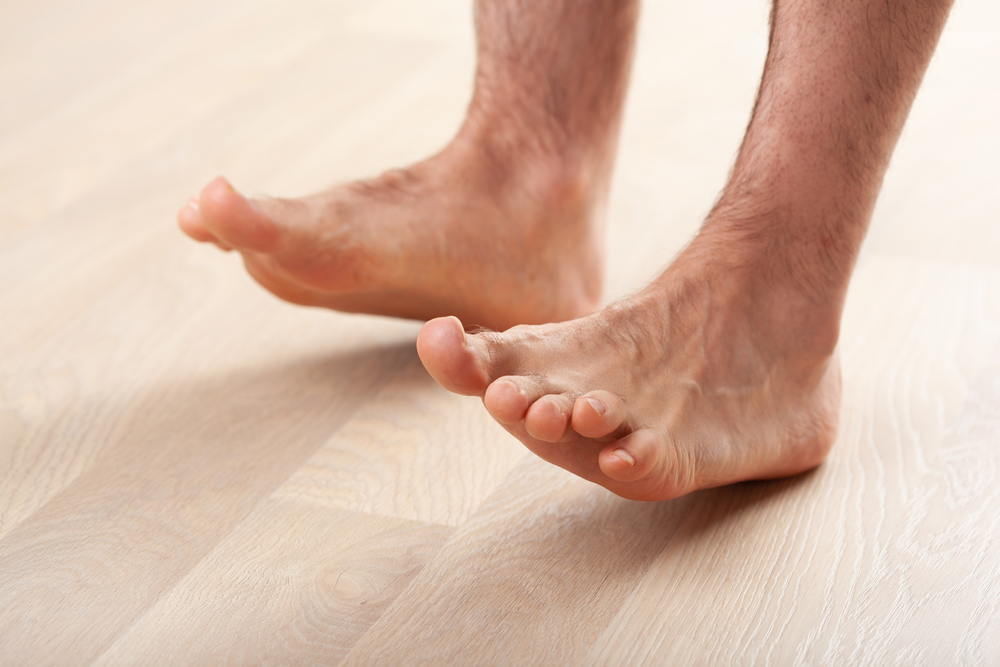
Flexible flatfoot: the arch is absent or reduced when the child stands, but an arch is visible when the child sits or stands on tiptoe. The foot is mobile and the deformity is positional — the arch collapses under weight but reconstitutes when weight is removed. This is the most common type of pediatric flatfoot and is usually a normal variant. In older children and adolescents who are symptomatic, it responds well to conservative treatment.
Rigid flatfoot: the arch is absent whether the child is weight-bearing or not — the foot remains flat even when sitting or standing on tiptoe. The subtalar joint is often stiff or has limited motion. Rigid flatfoot is far less common than flexible flatfoot and is almost always caused by a specific underlying condition: tarsal coalition (abnormal bony or fibrous fusion between foot bones), vertical talus, or neuromuscular conditions. Rigid flatfoot requires imaging, specialist evaluation, and frequently surgical treatment.
The tiptoe test: the simplest way to assess flexible vs. rigid flatfoot at home. Ask your child to stand on their tiptoes. If an arch appears when they do — the heel inverts and the midfoot lifts — the flatfoot is almost certainly flexible. If the foot remains flat on tiptoe and the heel does not invert, rigid flatfoot should be evaluated. If your child cannot perform the tiptoe test comfortably, or if it causes significant pain, come in for an evaluation.
Which Children with Flat Feet Actually Need Treatment?
Treatment is indicated when flat feet are causing problems — not simply because they are flat. The relevant questions are not “How flat are the feet?” but “Is the child having pain? Are they avoiding activities? Are the feet getting worse, not better?”
Children whose flat feet warrant evaluation and possible treatment include:
Children with pain: heel pain, arch pain, midfoot pain, or leg fatigue that limits participation in sports, play, or normal daily activity. Pain is the clearest indication for treatment.
Children with a rigid flatfoot: regardless of age, rigid flatfoot requires evaluation to identify the underlying cause.
Children with asymmetric flat feet: one flat foot and one normal arch is a red flag for a possible underlying unilateral cause (tarsal coalition, neuromuscular condition) and warrants imaging and specialist evaluation.
Children with significant gait abnormalities: frequent tripping and falling, inability to keep up physically with their classmates, or an unusual walking pattern associated with flat feet.
Children with associated conditions: obesity (significantly increases the rate and severity of flatfoot), tight Achilles tendon (worsens flatfoot mechanics and is a risk factor for Sever’s disease), or generalized ligamentous laxity (hypermobility syndromes).
Asymptomatic flexible flatfoot in a child does not automatically require orthotics or treatment. There is no strong evidence that treating asymptomatic pediatric flexible flatfoot with orthotics changes its long-term outcome. If your child’s flat feet cause no pain and no functional limitation, the recommendation may be watchful observation — not an immediate prescription for orthotics. We will tell you honestly which category your child falls into.
What Causes Flat Feet in Children?
Ligamentous laxity: the most common cause. Children’s ligaments are naturally more elastic than adults’, allowing the arch to collapse under weight. Hypermobile (“double-jointed”) children are particularly prone.
Genetics: flatfoot runs strongly in families. A parent with flat feet is the strongest single predictor.
Tight Achilles tendon: limits ankle dorsiflexion, causing the foot to pronate (roll inward and flatten) to compensate with each step.
Obesity: children with obesity are approximately three times more likely to develop symptomatic flatfoot from increased load on the medial arch.
Tarsal coalition (rigid flatfoot): an abnormal bony, cartilaginous, or fibrous connection between foot bones (most commonly calcaneonavicular or talocalcaneal). Becomes more symptomatic in adolescences over time. Causes painful rigid flatfoot and requires CT or MRI to identify.
Neuromuscular conditions: cerebral palsy, spina bifida, and related conditions can produce progressive flatfoot requiring a different management approach.
Symptoms That Suggest Flatfoot Is Causing Problems
Pain in the heel, arch, or midfoot — particularly with activity or at the end of the school day Leg or calf fatigue and aching after walking or standing Avoiding running or physical activity the child previously enjoyed Shoes wearing down asymmetrically — particularly excessive wear on the inner sole and heel Difficulty finding shoes that fit comfortably Frequent ankle sprains from the unstable, hyperpronated gait pattern Concurrent Sever’s disease (heel growth plate inflammation) — flat-footed children are more prone to this
Diagnosis
We begin with a thorough history: when the flat feet were noticed, whether there is pain, what activities provoke symptoms, and family history of flat feet. The examination includes:
Tiptoe test: determines flexible vs. rigid. If the arch reconstitutes and the heel inverts on tiptoe, the flatfoot is flexible. If it does not, rigid flatfoot is suspected.
Subtalar and midfoot range of motion: restricted motion in a flatfoot suggests a structural cause (tarsal coalition) rather than simple ligamentous laxity.
Achilles flexibility: tight calf muscles significantly worsen flatfoot mechanics and are assessed with the Silfverskiold test — measuring ankle dorsiflexion with the knee straight (gastrocnemius) and bent (soleus).
Gait assessment: observing the child walk reveals the degree of pronation, any in-toeing or out-toeing, and whether the gait pattern is producing compensatory problems above the foot.
Weight-bearing X-rays: obtained when rigid flatfoot is suspected, when the deformity is significant or asymmetric, or when surgical planning is being considered. Identifies tarsal coalition, bony alignment, and the degree of arch collapse.
CT or MRI: CT is the most sensitive study for tarsal coalition. MRI is used when soft tissue evaluation or fibrocartilaginous coalition needs to be characterized.
Treatment at Family Foot & Ankle Clinic
Treatment is matched to the finding, not the appearance. Our approach starts with an honest assessment of whether treatment will actually change the child’s outcome.
Observation — Asymptomatic Flexible Flatfoot
For children with flexible flatfoot who have no pain, no functional limitation, and no structural concerns, observation is appropriate. We document the arch profile and gait, provide footwear guidance, and see the child annually or as symptoms develop. There is no evidence that orthotics change the natural history of asymptomatic pediatric flexible flatfoot.
Conservative Treatment — Symptomatic Flexible Flatfoot
Footwear. Supportive, lace-up shoes with a firm heel counter and structured arch support are the first intervention. Flexible, thin-soled shoes (including many popular canvas and lifestyle brands) provide no arch support and worsen pronation mechanics. Sandals and flip-flops are particularly problematic.
Arch support insoles. For children with flexible flat feet, an over-the-counter arch support can help support the arch, reduce excessive pronation, and decrease stress on the heel growth plate during walking and sports. While these inserts do not control foot mechanics as precisely as a custom orthotic, many children experience significant symptom relief.
Recommended options include:
PowerStep KidSport Full-Length Orthotic: A supportive, semi-rigid orthotic designed specifically for active children. Available from PowerStep, Amazon, and select shoe retailers.
PowerStep Pinnacle Junior: Designed for older children and adolescents who need moderate arch support for athletic and everyday shoes. Available from PowerStep and Amazon.
KidSole Arch Support Insoles: A pediatric-specific arch support available in children’s sizes. Available on Amazon.
Aetrex Kids Orthotics: Available in multiple sizes and designed specifically for children’s foot mechanics. Available from Aetrex retailers and online.
Custom orthotics. For children with significant symptomatic flatfoot, tight Achilles tendon, or OTC insoles that have not provided adequate relief, a custom molded orthotic precisely addresses the individual child’s arch mechanics. Custom orthotics are more effective than OTC insoles for moderate to severe symptomatic flatfoot and are replaced as the child grows. More on our Custom Orthotics page.
Calf and Achilles stretching. For children with a tight Achilles tendon contributing to their flatfoot, a consistent daily stretching program reduces the compensatory pronation that worsens the deformity. The same gastrocnemius and soleus stretches used for Sever’s disease apply here. See our Calf Stretching Guide below.
Activity modification. Reducing high-impact activities during acute pain flares while maintaining fitness. Swimming and cycling are well-tolerated. Return to full activity as symptoms allow with supportive footwear in place.
Surgical Treatment
Surgery is considered for symptomatic flexible flatfoot that has not responded to an adequate conservative trial (typically 6–12 months), or for rigid flatfoot with an identifiable structural cause. Options include:
Tarsal coalition resection: for rigid flatfoot caused by tarsal coalition. Surgical removal of the abnormal bar restores subtalar motion. Most effective before significant secondary degenerative changes occur.
Achilles lengthening / gastrocnemius recession: when a tight Achilles is the primary driver, surgical lengthening corrects the mechanical source. Often combined with other procedures.
Reconstructive osteotomy: for severe, fixed deformities in older adolescents where other options are not appropriate.
See our Foot & Ankle Surgery Overview for general information on surgical care at our clinic.
Frequently Asked Questions
My child’s pediatrician said flat feet are normal and nothing needs to be done. Is that right?
For most children, yes. Asymptomatic flexible flatfoot in a child that is not causing pain or functional limitation does not require treatment and will often improve as the child grows. Where we add value is for children who do have pain, whose flat feet are not improving, or where a more structural evaluation is warranted to confirm the diagnosis and guide footwear choices.
Will my child’s flat feet cause problems when they are an adult?
In most cases, no. Most children with flexible flatfoot grow into healthy, active adults without developing significant foot problems related to their childhood flat feet. Treatment is recommended only when flat feet cause pain, fatigue, recurrent injuries, or difficulty with activities. While there is no strong evidence that treating childhood flexible flatfoot prevents future adult deformity, appropriate footwear, arch supports, or custom orthotics can improve comfort, function, and participation in sports while reducing the risk of secondary problems such as Sever’s disease, heel pain, and overuse injuries during childhood.
At what age should I bring my child in for flat feet?
If your child has flexible flat feet without pain and is under age 6, a specialist visit is usually not necessary—the arch is still developing in many children. An evaluation is appropriate at any age if your child has pain, frequent tripping, difficulty keeping up with peers, or recurrent ankle sprains. It is also appropriate if one foot is noticeably flatter than the other, the deformity appears to be worsening, or the foot is stiff rather than flexible. A rigid flatfoot—one in which the arch does not re-form when standing on tiptoe—should be evaluated promptly.
Do children need special shoes for flat feet?
Not necessarily. Most children with flat feet do not need expensive or custom footwear. For children with symptoms, a supportive shoe can improve comfort and provide a better foundation for an arch support or custom orthotic. Look for shoes with a firm heel counter, a stable sole, and a lace-up or Velcro closure. Avoid overly flexible shoes, canvas slip-ons, flip-flops, and backless sandals, which provide little support. We discuss appropriate footwear at every visit and can recommend current shoe models based on your child’s age, foot type, and activity level.
Not Sure if Your Child’s Flat Feet Need Attention? A Clear Evaluation Answers That Question.
We will examine your child’s feet, perform the tiptoe test and range of motion assessment, review their gait, and give you an honest answer: watch and wait, conservative treatment, or more active management. Book an appointment at our Coon Rapids or Golden Valley office.
Call 763-421-7300 | Book online
Serving Coon Rapids, Golden Valley, Maple Grove, Ham Lake, Andover, Champlin, Blaine, Plymouth, Wayzata, Minnetonka, St. Louis Park, Edina, and all Twin Cities communities.