
There’s a Big Difference Between a Store-Bought Insole and a Prescription Orthotic — Here’s What It Is
Custom orthotics are prescription medical devices designed specifically for your feet. Unlike store-bought insoles, which are made to fit the average foot, custom orthotics are created from a detailed scan or impression of your feet and tailored to your unique anatomy, biomechanics, activity level, and diagnosis. They are prescribed by a podiatrist to improve foot function, redistribute pressure, and reduce stress on injured joints, tendons, ligaments, and other tissues.
Not everyone with foot pain needs a custom orthotic. Many conditions improve with supportive footwear and a quality over-the-counter insole. However, when symptoms persist or a condition requires a level of precision that an off-the-shelf product cannot provide, a custom prescription orthotic can make a meaningful difference.
At Family Foot & Ankle Clinic, we perform a comprehensive biomechanical evaluation to determine whether a custom orthotic is the right treatment for your condition. Depending on your diagnosis, activity level, and treatment goals, your orthotic may be fabricated using advanced 3D-printing technology or by a specialized orthotics laboratory. Our focus is selecting the design and manufacturing method that will provide the best outcome for your specific foot and condition.
Our podiatrists evaluate, prescribe, and fit custom orthotics at our Coon Rapids and Golden Valley offices, serving patients across the north and west metro including Maple Grove, Ham Lake, Andover, Champlin, Blaine, Plymouth, Wayzata, Minnetonka, St. Louis Park, and Edina.
Already tried OTC insoles without success? If you’ve tried store-bought insoles without getting adequate relief, a custom orthotic may be the right next step. The difference is precision: a custom orthotic corrects your specific mechanics, not an approximation of your foot type.
Call 763-421-7300 | Book online
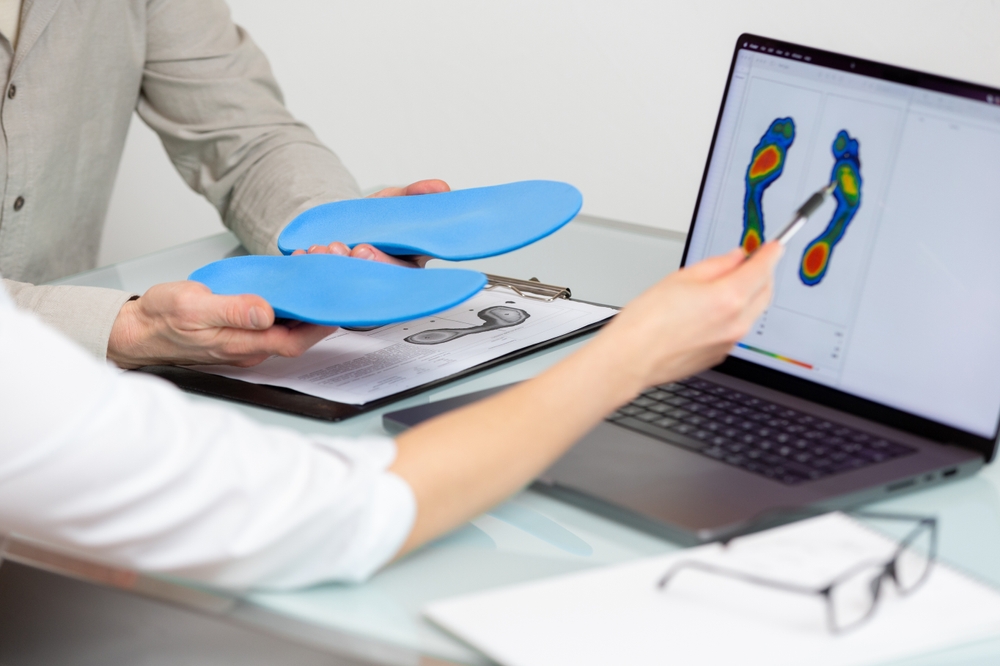
[WEB TEAM NOTE: Style the callout as a highlighted box. Place a prominent green “Schedule Appointment” button below the CTA. Make the phone number click-to-call (tel:7634217300). Hero image: a podiatrist conducting a foot casting or foam impression, or a finished pair of custom orthotics alongside a foot scan.]
Custom Orthotics vs. OTC Insoles — What’s Actually Different?
This is the question most patients have, and it deserves a straight answer:
- OTC insoles are manufactured in standard sizes and shapes. They provide cushioning and mild arch support based on a generic foot profile. Some are semi-rigid and provide meaningful support; others are primarily cushioning. They are a reasonable starting point for many conditions.
- Custom orthotics are fabricated from a three-dimensional capture of your specific foot — either a plaster or fiberglass cast, a foam impression, or a digital scan. The lab builds an orthotic to those exact specifications, with materials, posting, and modifications chosen by your podiatrist for your specific condition. The result fits your foot the way a tailored suit fits vs. a rack size.
A custom orthotic is most likely to make a meaningful difference in three situations:
- Your foot mechanics require a more precise solution. Some conditions involve significant flat feet or high arches, asymmetry between the feet, abnormal gait mechanics, or deformities that cannot be adequately addressed with an over-the-counter insert.
- Your foot requires a specific modification. Custom orthotics can be designed with features such as metatarsal pads, first-ray cutouts, heel lifts, heel cups, plantar fibroma accommodations, Morton’s extensions, reverse Morton’s extensions, dancer’s pads, or offloading for ulcers and pressure points—modifications that simply are not available in store-bought insoles.
- Your condition requires medical-grade precision. For patients with diabetes, peripheral neuropathy, Charcot foot, significant arthritis, post-surgical reconstruction, or other complex foot disorders, a custom orthotic is often prescribed to redistribute pressure, improve stability, and reduce the risk of skin breakdown, ulceration, or recurrent injury.
Types of Custom Orthotics We Prescribe
Not every custom orthotic is the same. Your podiatrist will prescribe the type of orthotic that best matches your foot structure, diagnosis, lifestyle, and goals.
Functional Orthotics
These are the most commonly prescribed custom orthotics. They are made from durable materials that provide support while helping improve foot mechanics and reduce abnormal stress on the feet and ankles. Functional orthotics are commonly prescribed for conditions such as plantar fasciitis, flat feet, high arches, tendon injuries, heel pain, and many overuse injuries. They fit comfortably in most athletic shoes, walking shoes, and many everyday shoes.
Accommodative Orthotics
Accommodative orthotics are designed to cushion and protect the foot rather than change how it moves. They are made from softer materials that redistribute pressure and reduce friction, making them especially helpful for patients with diabetes, peripheral neuropathy, plantar fibromas, painful calluses, arthritis, or other conditions where protecting the skin and reducing pressure is the primary goal.
Sport-Specific Orthotics
Different activities place different demands on your feet. A custom orthotic for a runner is not the same as one designed for a cyclist, golfer, skier, or someone who spends all day working on concrete floors. We can customize your orthotic to match your sport, work environment, footwear, and activity level, helping improve comfort while reducing the risk of injury.
Pediatric Orthotics
Children’s feet are constantly growing and changing. When a child develops symptoms from conditions such as flat feet, Sever’s disease, accessory navicular syndrome, or other pediatric foot problems, custom orthotics can help improve comfort, reduce strain on growing bones and tendons, and support healthy foot function. Because children grow quickly, orthotics are typically replaced every 1–2 years, depending on growth and fit.
Conditions We Commonly Treat With Custom Orthotics
Orthotics are prescribed across nearly every hub of our practice. The following is a representative list — if your condition is not listed, ask us at your visit whether orthotics are part of the appropriate management:
- Plantar fasciitis and chronic heel pain: Reduces stress on the plantar fascia and supports the arch during walking.
- Adult-acquired flatfoot (PTTD): Improves foot alignment, supports the arch, and helps reduce strain on the posterior tibial tendon.
- Pes cavus (high-arch foot): Redistributes pressure, improves stability, and cushions areas of increased stress.
- Metatarsalgia and forefoot pain: Offloads pressure from the ball of the foot to improve comfort with standing and walking.
- Morton’s Neuroma: Helps reduce compression of the affected nerve by redistributing forefoot pressure.
- Sesamoiditis and Sesamoid injuries: Offloads pressure beneath the big toe joint to promote healing and reduce pain.
- Plantar fibroma: Custom accommodations can relieve direct pressure on the fibroma, making walking more comfortable.
- Accessory navicular syndrome: Supports the arch and reduces stress on the accessory navicular and posterior tibial tendon.
- Achilles tendinitis and Haglund’s deformity: Reduces tension on the Achilles tendon and improves overall foot mechanics.
- Children’s foot conditions – Including symptomatic flat feet, Sever’s disease, accessory navicular syndrome, and other conditions where improved support may relieve pain and improve function.
- Diabetic foot care: total-contact accommodative insoles protect neuropathic feet from pressure-related skin breakdown and ulceration.
- Charcot foot: Helps accommodate foot deformity, improve stability, and reduce areas of excessive pressure after the condition has stabilized.
How the Custom Orthotic Process Works
Step 1 — Evaluation
A custom orthotic prescription begins with a thorough evaluation of your foot structure, gait, and the condition being treated. We assess foot alignment, range of motion, muscle strength, and how your foot behaves under load. Weight-bearing X-rays are reviewed where relevant. This evaluation determines the orthotic type, materials, and specific modifications needed.
Step 2 — Casting or Scanning
We capture the three-dimensional shape of your either with a foam impression box or a digital 3D scan. This capture is what makes the orthotic custom: it records the exact contours of your specific foot, which the laboratory uses as the foundation for fabrication.
Step 3 — Prescription and Fabrication
We create a detailed prescription tailored to your diagnosis, foot structure, biomechanics, activity level, and treatment goals. This includes the type of orthotic, the level of support and flexibility, the shell material, top cover, and any custom modifications such as metatarsal pads, heel cups, cutouts, heel lifts, or pressure-relieving accommodations. Depending on your specific needs, your orthotic is then fabricated by a specialized orthotics laboratory or using advanced 3D-printing technology. Some 3D-printed orthotics may be ready within a few days, while traditionally fabricated orthotics are typically available within 2–3 weeks. Once your orthotics are ready, you’ll return to our office for fitting, adjustments if needed, and instructions on gradually breaking them in.
Step 4 — Fitting and Break-In
When the orthotics arrive, we conduct a fitting visit to confirm the fit and make any minor adjustments. We provide a break-in schedule — starting with a few hours per day and gradually increasing — to allow your feet and lower limbs to adapt to the corrected position. Some patients take 2–4 weeks to fully adapt; others are comfortable immediately.
Break-in period is normal — and important. Custom orthotics change the position of your foot. If your foot has been compensating for a structural problem for years, it takes time for the muscles and soft tissue to adapt to the corrected alignment. Minor discomfort or fatigue during the first few weeks is expected. Skipping the break-in schedule is the most common reason patients report that “orthotics didn’t work for them.” We review the break-in protocol at your fitting visit.
Step 5 — Follow-Up and Adjustments
We recommend scheduling a follow-up visit for 4–6 weeks after fitting to assess how you’re responding and make any recommendations if any modifications are needed as you adjust to wearing them.
How Long Do Custom Orthotics Last?
For most adults, a well-made custom orthotic lasts 3–5 years with normal use. The shell — the rigid or semi-rigid foundation — maintains its corrective properties for years. The top cover material (the cushioned surface your foot rests on) wears faster and can be replaced without replacing the entire orthotic. Factors that shorten orthotic life include high activity levels, heavy use in athletic footwear, and significant changes in body weight or foot structure.
For children, orthotics need to be replaced as the foot grows — typically every 1–2 years depending on the child’s growth rate.
Frequently Asked Questions
Does insurance cover custom orthotics?
Coverage for custom orthotics varies significantly by insurance plan. Many commercial insurance plans provide coverage when custom orthotics are medically necessary, while others specifically exclude them as a plan benefit.Traditional Medicare and most Medicare Supplement plans do not cover custom foot orthotics. (Coverage for diabetic therapeutic shoes and inserts is a separate Medicare benefit for qualifying patients.) Because every plan is different, we encourage you to contact your insurance company before your appointment to verify your benefits. Ask whether custom foot orthotics (HCPCS code L3000) are a covered benefit under your durable medical equipment (DME) coverage.
Can’t I just buy better insoles at the running store?
Often, yes. Many patients improve with supportive shoes and a quality over-the-counter insole, which is why we frequently recommend trying those first. If your symptoms persist, recur, or require a level of support or customization that a store-bought insert cannot provide, a custom orthotic may be the next step. If you’re unsure which over-the-counter insert is appropriate, we also offer medical-grade prefabricated inserts in our clinic. These provide a higher level of support than many retail insoles and are an excellent option for many patients before progressing to a custom prescription orthotic.
My orthotics from another provider didn’t help. Why would these be different?
There are several reasons a previous orthotic might not have worked: incorrect prescription for the underlying condition, a mold taken in the wrong foot position, poor laboratory quality, inadequate break-in, or a condition that orthotics cannot meaningfully address. If you have had custom orthotics before without success, we are happy to review what was prescribed and why it may not have worked before recommending a new pair. Our Second Opinion / Foot Pain Not Improving visit is a good starting point.
How do I take care of my custom orthotics?
Wipe the top cover with a damp cloth and mild soap as needed. Air dry — do not put orthotics in a washing machine or dryer, and keep them away from direct heat sources (car dashboards in summer, dryer vents). If the top cover becomes worn or compressed, bring them in — recovering is far less expensive than replacing the entire orthotic. Store them in your shoes when not in use rather than in a bag, so they maintain their shape.
Not Sure if You Need Custom Orthotics? Start With a Proper Evaluation.
The right orthotic for your foot depends on your specific mechanics, your condition, and your footwear. A 20-minute evaluation tells us whether a custom orthotic is the right tool, what type is appropriate, and whether there are other interventions that should happen alongside it. Book an appointment at our Coon Rapids or Golden Valley office.
Call 763-421-7300 | Book online
Serving Coon Rapids, Golden Valley, Maple Grove, Ham Lake, Andover, Champlin, Blaine, Plymouth, Wayzata, Minnetonka, St. Louis Park, Edina, and all Twin Cities communities.