Your Active Child Is Limping After Practice — Here Is the Most Likely Explanation
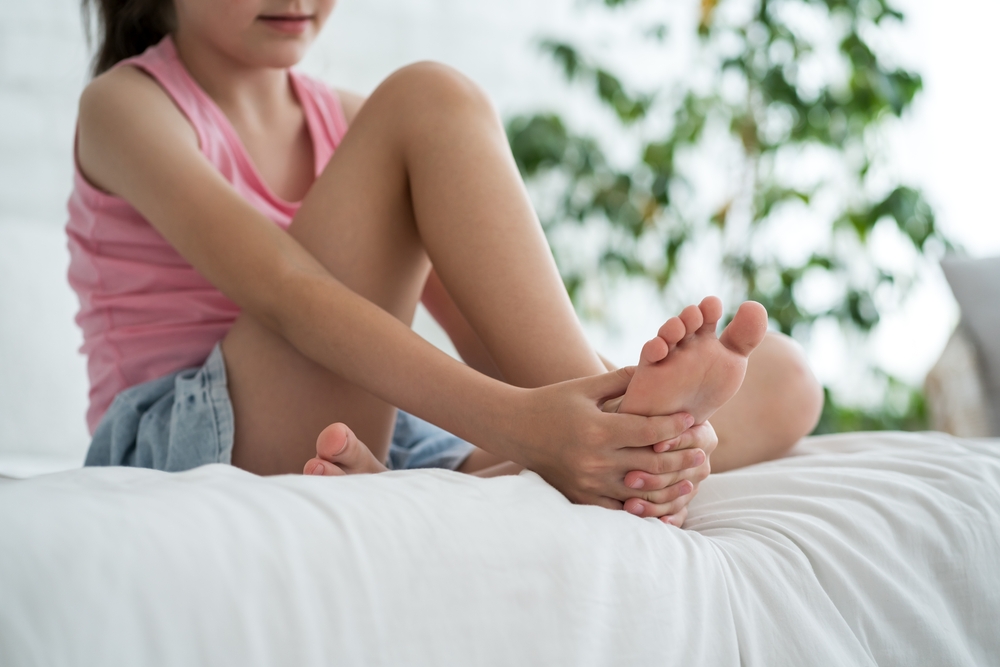
If your child between the ages of 8 and 14 is complaining of heel pain — particularly after sports, at the end of a practice, or when getting up after sitting for a while — Sever’s disease is by far the most common cause. Despite the alarming name, it is not actually a disease. It is a temporary inflammation of the growth plate at the back of the heel bone (calcaneus) that develops when the demands of sport and activity outpace the heel’s ability to handle the load during a growth spurt.
The good news is that Sever’s disease is very treatable, it does not cause permanent damage, and it resolves completely once the heel bone finishes growing. The challenge is managing it in an active, sports-involved child who does not want to stop playing. Our podiatrists treat Sever’s disease at our Coon Rapids and Golden Valley offices, serving families across the north and west metro including Maple Grove, Ham Lake, Andover, Champlin, Blaine, Plymouth, Wayzata, Minnetonka, St. Louis Park, and Edina.
The key distinction from adult heel pain: In adults, plantar fasciitis pain is typically worst with the first steps in the morning and improves after walking for a few minutes. In children with Sever’s disease, heel pain generally does not improve with morning walking — it worsens with activity and is worst during and after sports. If your child’s heel hurts more during practice than before it, Sever’s disease is the most likely explanation.
Call 763-421-7300 | Book online
What Is Sever’s Disease?
The heel bone (calcaneus) is one of the last bones in the foot to finish growing. In children and early adolescents, there is a layer of cartilage at the back of the heel bone called the apophysis or growth plate — the area where new bone is formed as the foot grows. This growth plate is significantly weaker and more vulnerable to stress than the surrounding mature bone.
The Achilles tendon attaches to the back of the heel directly at or near this growth plate. The plantar fascia attaches to the underside. During a growth spurt, the long bones of the leg grow faster than the surrounding muscles and tendons can lengthen to keep up. The result is a tight Achilles tendon that pulls hard on the growth plate with every step, and a growth plate that is simultaneously being pounded by running and jumping on hard surfaces. When this repetitive stress exceeds what the developing growth plate can tolerate, inflammation develops — and that is Sever’s disease.
Why does it resolve on its own eventually? Once the growth plate closes — typically between ages 14 and 16 — the calcaneal apophysis fuses to the rest of the heel bone and becomes as strong as the surrounding bone. The vulnerability disappears permanently. Sever’s disease cannot occur in adults because adults do not have an open calcaneal growth plate.
Causes & Risk Factors
- Sports with running and jumping: soccer, basketball, track, cross-country, gymnastics, and dance are the most common settings. Any activity that involves repetitive heel impact on hard surfaces increases the load on the growth plate.
- Growth spurts: Sever’s disease most commonly begins or worsens during a growth spurt, when the bones are lengthening faster than the surrounding muscles and tendons. A child who was symptom-free last season may develop Sever’s after growing two inches over the summer.
- Tight calf muscles and Achilles tendon: the primary mechanical driver. A tight Achilles tendon increases the tensile pull on the growth plate with every step. Children who have always had tight calves are more vulnerable.
- Flat feet (overpronation): flat-footed children pronate (roll inward) with each step, which alters the mechanics of how forces are transmitted through the heel and increases stress on the growth plate.
- High-arched foot (cavus): a high arch concentrates impact loading at the heel, also increasing growth plate stress.
- Unsupportive footwear: cleated shoes (soccer cleats, baseball spikes) provide minimal heel cushioning and are a particular risk factor. Children who spend entire practices and games in cleats are significantly more vulnerable.
- Rapid increase in training volume: starting a new sport season, joining multiple teams simultaneously, or a sudden jump in practice frequency and intensity.
Symptoms
- Pain at the back or bottom of the heel, typically worse during and after athletic activity
- Limping after practice or a game, or refusing to put weight on the foot after activity
- Walking on tiptoes to avoid putting pressure on the heel
- Tenderness when the sides of the heel are squeezed together — the squeeze test is the most reliable clinical sign of Sever’s disease
- Stiffness and pain in the heel when first getting up after sitting for a long period
- Less commonly: swelling at the back of the heel and reluctance to participate in sports the child previously enjoyed
Sever’s disease is almost never a reason to stop all sports permanently. In most cases, we can find a way to manage the condition that allows continued participation in modified or reduced form. Complete rest is reserved for severe or non-responding cases. The goal is always to keep active children active while the condition heals.
Diagnosis
Diagnosis is primarily clinical: we obtain a thorough history of symptoms, activity level, recent growth, and footwear, followed by a hands-on examination. The squeeze test — applying gentle medial-lateral compression to the back of the heel — reproduces pain in Sever’s disease and is the most reliable bedside finding.
We assess calf and Achilles flexibility (a tight calf dramatically worsens the condition), foot type (flat vs. high-arched), gait pattern, and footwear. Weight-bearing X-rays of the foot and ankle are typically obtained to exclude other causes of pediatric heel pain — stress fracture, bone cyst, infection, or tumor — which are rare but important not to miss.
The X-ray in Sever’s disease: X-ray findings in Sever’s disease are not diagnostic on their own. The growth plate normally appears irregular and fragmented on X-ray in children — which can look alarming but is a normal developmental finding, not evidence of injury. Diagnosis is made on clinical grounds. X-rays are obtained primarily to exclude other conditions, not to confirm Sever’s disease.
Treatment at Family Foot & Ankle Clinic
Most children with Sever’s disease respond well to conservative treatment. The approach combines load reduction, cushioning and support, and flexibility improvement.
Activity Modification
Complete rest is rarely necessary and rarely achieved in practice with motivated young athletes. The more sustainable approach is relative rest — reducing the activities that provoke pain while maintaining fitness through lower-impact alternatives:
- Reduce practice duration or frequency during a flare, particularly on hard surfaces
- Swimming and cycling are well-tolerated alternatives that maintain cardiovascular fitness without heel impact
- Avoid running through significant pain — limping through practice causes compensatory movement patterns that create secondary problems
- If pain is severe, a short period of complete rest from impact activity (1–2 weeks) often breaks the pain cycle and allows more gradual return
Heel Cushioning and Support
Heel cups and pads. A silicone heel cup provides cushioning directly at the impact site and slightly elevates the heel, reducing the tension the Achilles tendon places on the growth plate. This is often the single most immediately effective intervention. Available over the counter at sporting goods stores and pharmacies or online.
Arch support insoles. For children with flexible flat feet, an over-the-counter arch support can help support the arch, reduce excessive pronation, and decrease stress on the heel growth plate during walking and sports. While these inserts do not control foot mechanics as precisely as a custom orthotic, many children experience significant symptom relief.
Recommended options include:
- PowerStep KidSport Full-Length Orthotic: A supportive, semi-rigid orthotic designed specifically for active children. Available from PowerStep, Amazon, and select shoe retailers.
- PowerStep Pinnacle Junior: Designed for older children and adolescents who need moderate arch support for athletic and everyday shoes. Available from PowerStep and Amazon.
- KidSole Arch Support Insoles: A pediatric-specific arch support available in children’s sizes. Available on Amazon.
- Aetrex Kids Orthotics: Available in multiple sizes and designed specifically for children’s foot mechanics. Available from Aetrex retailers and online.
Custom orthotics. For children with significant flat feet, high arches, recurrent symptoms, or Sever’s disease that has not improved with appropriate shoes and over-the-counter inserts, a custom orthotic provides substantially greater control of foot mechanics than an over-the-counter insert. By more precisely addressing abnormal biomechanics, custom orthotics can reduce stress on the heel growth plate, improve function, and help prevent recurrent symptoms. Learn more on our Custom Orthotics page.
Stretching — The Most Important Long-Term Intervention
Tight calf muscles are the primary mechanical driver of Sever’s disease. Daily stretching significantly reduces symptoms and prevents recurrence. These two stretches should become a long-term habit — not a short-term treatment — performed before and after every practice and game:
- Gastrocnemius stretch (straight knee): stand facing a wall, hands flat on the wall, affected foot back with the knee straight and heel flat. Lean forward until a stretch is felt in the upper calf. Hold 30 seconds, 3 repetitions per leg.
- Soleus stretch (bent knee): same position but with the back knee slightly bent. Feels a stretch lower in the calf near the Achilles. Hold 30 seconds, 3 repetitions per leg.
See our Calf Stretching Guide below for illustrated instructions.
Footwear
- Limit time in cleats: cleated shoes provide minimal heel cushioning. Children should change into regular athletic shoes as soon as they leave the playing surface — wearing cleats to school and around the house significantly increases cumulative heel loading.
- Choose well-cushioned, supportive athletic shoes with a moderate heel: avoid flat, minimalist, or zero-drop shoes during an active episode. Replace shoes when cushioning compresses — which happens faster than the shoe appears worn.
NSAIDs and Ice
Ibuprofen (weight-dosed as directed by your pediatrician) and ice (15 minutes to the back of the heel after activity, wrapped in a thin towel) reduce acute inflammation and pain during flares. These are adjunctive measures — effective for symptom control but not addressing the underlying mechanical cause.
Immobilization — Severe Cases
In severe cases where pain is not responding to the above measures and is significantly limiting the child’s daily activity — not just sports participation — a short course of immobilization in a walking boot or cast may be necessary. This is rarely required but is effective when other measures have failed. Duration is typically 2–4 weeks, followed by gradual return to activity with all supportive measures in place.
Return to Sport
Most children can return to sport with modifications rather than complete cessation. The guiding principle: pain during activity should not exceed 3 out of 10. Running through significant pain prolongs the condition and creates compensatory movement patterns that cause secondary injuries.
- Ensure heel cups, appropriate insoles, and well-cushioned shoes are in place before returning
- Begin with shorter practice sessions on softer surfaces (grass rather than turf or pavement)
- Stretch before and after every session — this is non-negotiable, not optional
- Limit or eliminate cleated shoe time to the playing field only
- If pain worsens significantly during return, reduce load and re-evaluate
Frequently Asked Questions
Does my child have to stop all sports?
In most cases, no. The goal is modified participation rather than complete rest. Many children manage Sever’s disease successfully with heel cups, insoles, stretching, and limited cleat time while continuing to play at a reduced intensity. Complete rest from all impact activity is reserved for severe cases or when pain is present even with walking — not just during sports.
How long does Sever’s disease last?
An individual episode typically resolves within 2–3 months with appropriate management. However, Sever’s disease commonly recurs during growth spurts until the growth plate closes — which happens somewhere between ages 14 and 16. Parents should expect the condition to come and go during this window, particularly when training volume increases or when the child grows rapidly. Each episode is managed the same way; the stretching and footwear habits become increasingly important as a long-term strategy.
Will Sever’s disease cause permanent damage to my child’s heel?
No. Sever’s disease causes temporary inflammation of the growth plate during the years it is open, but it does not cause permanent damage to the heel bone or growth plate. Once the growth plate closes, the condition cannot recur and the heel bone is as strong as normal. There are no long-term consequences of properly managed Sever’s disease.
My child says the heel hurts even just walking to school. Should I be worried?
Pain with routine daily activity rather than just sports activity suggests a more significant episode that warrants evaluation. We want to confirm the diagnosis with X-rays to exclude other causes of pediatric heel pain (stress fracture, infection, bone lesion) and assess whether immobilization is appropriate. If your child is limping significantly with normal walking, book an appointment rather than waiting. Our Second Opinion / Foot Pain Not Improving visit is also available if you have been elsewhere without a clear diagnosis or resolution.
Active Child With Heel Pain? Get a Proper Diagnosis and a Plan That Keeps Them Playing.
Most children with Sever’s disease do not have to sit out the season. With the right combination of support, stretching, and load management, they can keep playing — more comfortably than before. Book an appointment at our Coon Rapids or Golden Valley office and we will examine your child, confirm the diagnosis, and give you a clear, practical plan.
Call 763-421-7300 | Book online
Serving Coon Rapids, Golden Valley, Maple Grove, Ham Lake, Andover, Champlin, Blaine, Plymouth, Wayzata, Minnetonka, St. Louis Park, Edina, and all Twin Cities communities.