
Found a New Lump on Top of Your Foot? Here’s What It Likely Is
If you’ve noticed a soft lump on the top of your foot that wasn’t there before, the most likely explanation is a ganglion cyst — a fluid-filled sac that forms along a tendon or joint. It can appear suddenly, grow slowly, change size from week to week, or seem to disappear entirely before returning later. All of that is typical behavior for a ganglion cyst, not a red flag on its own.
Our podiatrists evaluate foot lumps every week at our Coon Rapids and Golden Valley offices, serving families across the north and west metro including Maple Grove, Ham Lake, Andover, Champlin, Blaine, Plymouth, Wayzata, Minnetonka, St. Louis Park, and Edina.
The key reassurance: Ganglion cysts are benign — not cancer, not an infection, and not a sign of a more serious condition. The main reasons to have one examined are to confirm the diagnosis (a few other conditions can look similar) and to talk through whether treatment makes sense for you.
Call 763-421-7300 | Book online
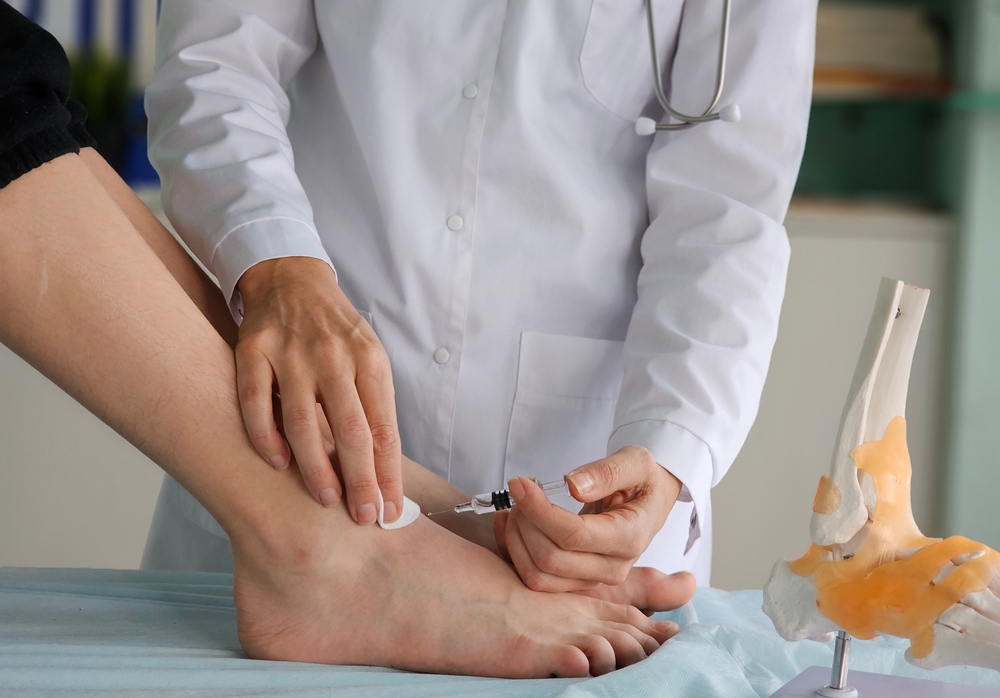
[WEB TEAM NOTE: Style the callout as a highlighted box with green left-border styling — same visual language used for the reassurance box on the Sever’s Disease page. Place a prominent green “Schedule Appointment” button immediately below the callout and inline CTA. Make the phone number click-to-call (tel:7634217300). Hero image: a close-up clinical photo of a dorsal foot lump being examined, or a patient pointing to the top of their foot.]
What Is a Ganglion Cyst?
A ganglion cyst is a benign sac filled with a thick, jelly-like fluid that develops from the lining of a nearby tendon sheath or joint capsule. On the foot, ganglion cysts most often appear on the top (dorsal surface), frequently near the midfoot or the front of the ankle, though they can develop elsewhere. They’re one of the most common soft-tissue masses seen in a podiatry office. Size varies widely — some stay pea-sized for years, others grow to an inch or more — and it’s common for a cyst to fluctuate in size or temporarily disappear only to return later.
What Else Could This Lump Be?
Ganglion cysts are the most common cause of a soft, movable lump on top of the foot, but they aren’t the only possibility. Part of the exam is ruling out — or identifying — these related conditions:
- Bone spur (dorsal exostosis) — a hard, bony, immobile prominence, often at the first metatarsal-cuneiform joint, sometimes linked to early arthritis. See our Osteoarthritis of the Foot & Ankle page.
- Lipoma — a soft, slow-growing fatty tumor that can occur anywhere on the body, including the foot.
- Giant cell tumor of the tendon sheath — a firmer, solid soft-tissue mass, most common near the toes.
- Plantar wart — usually on the sole rather than the top of the foot, with a rougher surface. See our Plantar Warts page.
- Plantar fibroma — a firm nodule within the arch’s plantar fascia, not on top of the foot. See our Plantar Fibroma page.
Because several of these look similar to the naked eye but are managed very differently, an in-office exam — not a guess based on appearance alone — is the safest way to know which one you have.
Causes & Risk Factors
- A single traumatic injury: a direct blow or twist to the foot or ankle can trigger fluid to collect at a tendon sheath or joint.
- Repetitive microtrauma: ongoing stress from footwear, athletics, or occupational demands on a joint or tendon.
- Underlying joint or tendon irritation: in many cases, no identifiable trigger is ever found — the exact cause of ganglion cysts isn’t fully understood.
There isn’t a reliable way to prevent a ganglion cyst from forming, and having one doesn’t indicate a more serious underlying condition.
Symptoms
- A visible, movable lump on top of the foot — the most common, and often the only, symptom
- Tingling or burning if the cyst is pressing on a nearby nerve
- Dull ache or pressure if the cyst is pushing against a tendon or joint capsule
- Shoe irritation or difficulty finding comfortable footwear as the lump rubs against the upper
- Size that fluctuates — the lump may grow, shrink, or briefly disappear as fluid redistributes
When to be seen sooner rather than later: a lump that is rapidly growing, hard and fixed in place (doesn’t move under the skin), red and warm, or accompanied by fever is less typical of a simple ganglion cyst and warrants a closer look.
Diagnosis
Diagnosis starts with a hands-on exam. A ganglion cyst is typically soft, mobile under the skin, and produces a distinct “give” when pressed — features that help distinguish it from a bone spur or solid tumor. To confirm, we may:
- Shine a light through the lump (transillumination) — fluid-filled cysts let light pass through; solid masses don’t
- Use a needle to withdraw a small fluid sample for evaluation
- Order an X-ray to rule out a bony cause, such as a spur or arthritic change
- Recommend an ultrasound or MRI in select cases where the diagnosis isn’t clear from exam alone
Treatment at Family Foot & Ankle Clinic
Most ganglion cysts don’t require immediate treatment. We tailor the approach to your symptoms, the cyst’s size, and how much it’s interfering with your shoes or activity.
Home Care & Monitoring
- Watchful waiting. If the cyst is painless and not affecting how you walk, simply monitoring it over time is a completely reasonable first step.
- Shoe modification. Switching to shoes with a roomier upper, or adding a protective pad over the area, reduces rubbing and irritation.
- Compression sleeve. Can help control swelling and, in some cases, reduce how much the cyst waxes and wanes in size.
In-Office Aspiration & Injection
When a cyst is painful, growing, or interfering with shoes, aspiration is typically the next step and can often be done the same day as your visit. We drain the fluid with a needle and, in most cases, follow it with a corticosteroid injection to help reduce recurrence.
Good to know: aspiration is a quick, in-office procedure with minimal downtime, and many patients return to normal footwear the same day. Recurrence is common after aspiration alone, though, and more than one session is sometimes needed to keep the cyst from coming back.
Surgical Excision
If a cyst returns repeatedly after aspiration, or is large enough to consistently limit activity, surgical removal is an option. Excision has a meaningfully lower recurrence rate than aspiration and injection, though recurrence is still possible even after surgery. This is typically an outpatient procedure with a straightforward recovery.
Can Ganglion Cysts Be Prevented?
Because the cause isn’t fully understood, there’s no proven way to prevent a ganglion cyst from forming or returning. Wearing supportive, properly fitted shoes and addressing footwear-related irritation early can help minimize discomfort if one does develop.
Frequently Asked Questions
Is a ganglion cyst on the foot dangerous?
No. Ganglion cysts are benign and are not a sign of cancer. They can be uncomfortable or cosmetically bothersome, but they are not medically dangerous on their own.
Can I pop or drain a ganglion cyst myself?
We strongly advise against this. Home attempts to puncture or “smash” a cyst carry a real risk of infection and don’t reliably prevent the cyst from returning — in-office aspiration is done under sterile conditions with the right instruments for the job.
Will my ganglion cyst come back after treatment?
It might. Recurrence is common after aspiration and injection, which is why we’re upfront that more than one session is sometimes needed. Surgical removal carries a lower recurrence rate but doesn’t eliminate the possibility entirely.
How long does recovery take after a ganglion cyst is removed?
After in-office aspiration, most patients resume normal activity the same day. After surgical excision, recovery is typically measured in a few weeks, depending on the cyst’s size and location.
Have a Lump on Your Foot? Get a Clear Diagnosis and a Same-Visit Plan.
Most foot lumps are benign, but an accurate diagnosis is the only way to know for sure. Book an appointment at our Coon Rapids or Golden Valley office and we will examine the lump, confirm the diagnosis, and discuss treatment options — including same-visit aspiration when appropriate.
Call 763-421-7300 | Book online
Serving Coon Rapids, Golden Valley, Maple Grove, Ham Lake, Andover, Champlin, Blaine, Plymouth, Wayzata, Minnetonka, St. Louis Park, Edina, and all Twin Cities communities.