
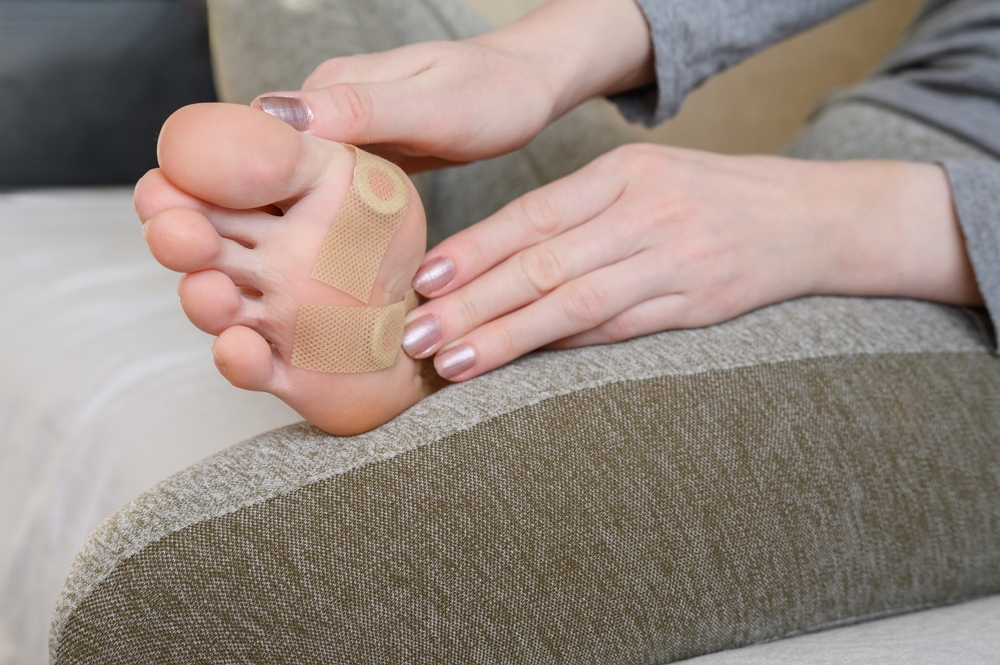
A Wart on the Bottom of Your Foot That Won’t Go Away — Why It’s Harder to Treat Than It Looks
Plantar warts — the medical term is verruca plantaris — are among the most frustrating conditions in podiatric skin care. They are caused by human papillomavirus (HPV), which infects the outer layer of skin through small breaks and cracks on the sole of the foot. Unlike warts on the hand or elsewhere on the body, plantar warts grow inward under the pressure of weight-bearing, making them painful with every step and much more difficult to eliminate than a surface wart.
Most patients arrive at our clinic having already tried over-the-counter salicylic acid products for months without success. Over-the-counter (OTC) treatments can work for small, early warts, but established plantar warts — particularly those that have been present for more than a few months, have grown large, or have spread to form a mosaic — consistently require professional treatment. Our podiatrists offer a full menu of in-office wart treatments at our Coon Rapids and Golden Valley offices, including SWIFT microwave therapy, chemical destruction, and surgical excision. We serve patients across the north and west metro including Maple Grove, Ham Lake, Andover, Champlin, Blaine, Plymouth, Wayzata, Minnetonka, St. Louis Park, and Edina.
Not sure if it’s a wart or a callus? Plantar warts and calluses both cause a thickened, painful area on the sole of the foot. The key distinction: squeeze a wart from the sides (perpendicular to the skin surface) and it hurts significantly. Press directly on it and it may not be as painful. A callus hurts when pressed directly. Warts also typically show tiny black dots on the surface — clotted capillaries — and interrupt the normal skin lines (fingerprint-like ridges) of the foot.
Call 763-421-7300 or book online
What Is a Plantar Wart?
HPV infects the squamous epithelial cells of the skin, causing abnormal cell proliferation that produces the wart lesion. The virus is contracted from contaminated surfaces — most commonly gym locker room floors, pool decks, shared showers, and hotel bathrooms — and enters through microabrasions in the skin. Not everyone who is exposed develops a wart; immune status, skin integrity, and HPV strain determine individual susceptibility.
Plantar warts come in two main presentations:
- Discrete (solitary) wart: a single, well-defined lesion, usually on a weight-bearing surface such as the heel or ball of the foot. Often 1–2 cm in diameter, with the characteristic rough, cauliflower-like surface and black dots (thrombosed capillaries) visible after debridement.
- Mosaic warts: a cluster of smaller, coalescing warts that merge to cover a broader area. More common in patients with prolonged infection or compromised immune function. Significantly more difficult to treat than a discrete wart and often require multiple treatment modalities.
Important: plantar warts do not always resolve on their own. Some do — particularly in children with robust immune responses — but adults with established warts, mosaic patterns, or a history of recurrence should not wait for spontaneous resolution. Untreated warts can spread to adjacent skin, grow larger and deeper, and become progressively harder to treat.
Why Over-the-Counter Treatments Often Fail
OTC salicylic acid products can work for small, early warts applied consistently over weeks. They predictably fail when:
- The wart is too deep or established for surface-level acid to penetrate
- The surrounding callus is not adequately pared before each application, blocking penetration
- Mosaic or multiple warts require simultaneous treatment of all lesions
- The immune system is not mounting an adequate response to HPV, making recurrence inevitable regardless of surface treatment
Professional treatments address these limitations directly with higher-concentration agents, mechanical debridement at each visit, and immune-stimulating modalities that recruit the body’s own defenses.
Our Treatment Options
We select the treatment — or combination of treatments — based on wart size, depth, number, location, patient age, and history of prior treatment. Many patients benefit from more than one modality used together.
| Treatment | How It Works | Best For | What to Expect |
| SWIFT Microwave Therapy | Delivers precisely controlled microwave energy (8 GHz) through a probe applied to the wart for 2–3 seconds. Heats infected tissue to 42–45°C, triggering an immune response that targets the HPV virus systemically. Works with the body’s immune system rather than destroying tissue. | Stubborn or recurrent warts. Mosaic warts. Patients who want no downtime, no wound care, and no scarring. Children who cannot tolerate destructive treatments. Not used in pregnant patients. | 3–4 sessions spaced 3–4 weeks apart. Brief, sharp sensation during treatment — no anesthesia required. Immediate return to activity. Self-pay — not covered by insurance. |
| Chemical destruction — Cantharone | Cantharidin — a blistering agent derived from blister beetle extract — is applied to the wart in-office. It causes a blister to form beneath the wart, separating it from the underlying healthy tissue. The blister and wart are removed at the follow-up visit. | Discrete warts at all depths. Particularly effective for children as it is painless at application. Good for warts in sensitive locations. Not used in pregnant patients. | Applied in-office; blisters form over 24–48 hours. Mild discomfort during blistering phase. Follow-up in 2 weeks to remove blister roof and evaluate. Typically requires repeated applications for complete resolution. |
| Chemical destruction — bleomycin injection | Bleomycin — a chemotherapy-class antiviral agent — is injected directly into the wart, causing cell death in the HPV-infected tissue. Highly effective for recalcitrant warts that have failed other treatments. | Recalcitrant discrete warts unresponsive to other modalities. Not used in pregnant patients. | Injection into the wart in-office. Treated tissue turns black and sloughs over 1–3 weeks. Often requires repeated injections for complete resolution. |
| Chemical destruction — salicylic acid (professional strength) | High-concentration salicylic acid compound (40–70%), significantly stronger than OTC products, applied and covered. Systematically pared at each visit to remove treated tissue and allow deeper penetration. | Suitable for all ages. Can be combined with SWIFT or other modalities. | In-office application following debridement. Home application and gentle debridement between visits as instructed. Multiple visits typically required. |
| Surgical excision / curettage | The wart is surgically excised or curetted (scooped out) under local anesthesia. Complete physical removal of the lesion. | Isolated warts that have not responded to other treatments. Single, well-defined warts where immediate removal is preferred over a multi-visit course. | Local anesthesia in-office. Wound requires dressing and aftercare. Theoretical risk of scar on the plantar surface — discussed before proceeding. Most appropriate when other methods have been exhausted. |
SWIFT Microwave Therapy — a different approach. Every other treatment on this list destroys wart tissue directly. SWIFT does something different: it recruits the immune system to do the work. The brief heat pulse creates a heat shock protein response that makes the HPV-infected cells visible to the immune system, which then clears the infection from the inside out. This is why SWIFT works on mosaic warts and recurrent warts that have defeated repeated destructive treatments — it changes the body’s relationship with the virus rather than just attacking the lesion. No anesthesia, no wound, no downtime, no scarring. Offered as a self-pay service. Ask us about pricing at your visit.
How We Choose Your Treatment
At your first visit we pare the wart, confirm the diagnosis, and assess the key factors that determine which treatment is most appropriate:
- Size and depth: small, superficial warts respond to salicylic acid and cantharone. Deep, established warts that have been present for years typically benefit more from bleomycin or SWIFT.
- Number and pattern: a single wart versus a mosaic pattern calls for different strategies. SWIFT is particularly suited to mosaic warts because it works systemically rather than requiring treatment of every individual lesion.
- Patient age and immune status: children often respond well to immune-stimulating approaches. Immunocompromised patients — including those on biologics, transplant medications, or with diabetes — may require more aggressive treatment and closer monitoring.
- Prior treatment history: a patient who has had six rounds of salicylic acid and two of cantharone without resolution is a candidate for bleomycin or SWIFT, not another round of the same approach.
- Location: warts on weight-bearing surfaces require treatment approaches that minimize wound complications and scarring. Surgical excision on a weight-bearing heel or ball of foot carries more risk than on a non-weight-bearing surface.
Prevention and Reducing Spread
- Cover warts during treatment: keep plantar warts covered in shared environments to reduce HPV shedding to floors and surfaces.
- Wear shoes in shared wet areas: locker rooms, pool decks, gym showers, hotel bathrooms. HPV survives on these surfaces and enters through microabrasions in the sole of the foot.
- Do not pick at or cut warts: this spreads viral material to adjacent skin and is how single warts become mosaic patterns.
- Maintain intact skin: adequately moisturized feet reduce microabrasions that serve as HPV entry points. Cracked heels are particularly vulnerable.
Frequently Asked Questions
How many treatments will I need?
This varies significantly based on the treatment approach, the wart’s size and depth, and your immune response. Chemical treatments typically require biweekly or monthly visits for several encounters. SWIFT requires 3–4 sessions over 3-6 months, with the immune response often continuing to clear warts between sessions. There is no way to guarantee a specific number of visits upfront — we reassess at each visit and adjust the plan based on response.
Does SWIFT microwave therapy hurt?
Most patients describe a brief, sharp burning that lasts only 2–3 seconds during the energy pulse. No local anesthesia is required. The discomfort is short-lived and there is no lingering pain afterward. Most patients can walk normally immediately after and return to full activity the same day. Children who are apprehensive about needles often find SWIFT more tolerable than injection-based treatments.
My wart has been treated multiple times and keeps coming back. What are my options?
Recurrent warts that defeat repeated treatment usually do so because the immune system is not mounting an adequate response to the HPV. Destructive treatments (acid, cantharone, freezing) that keep the wart contained without eliminating the viral reservoir will produce this cycle. SWIFT is specifically designed for this scenario — it addresses the immune failure rather than continuing to destroy tissue that keeps regrowing. Bleomycin injection is the other high-efficacy option for recalcitrant discrete warts. We discuss both at any second-opinion visit.
Can children be treated for plantar warts?
Yes — plantar warts are common in school-age children and adolescents, who have higher rates of both exposure and susceptibility. Cantharone (painless at application) and SWIFT (no needles, no wound) are particularly well-suited to pediatric patients. Bleomycin injections are reserved for older adolescents with recalcitrant warts. For children with warts that are not painful and not spreading, watchful waiting is sometimes appropriate — spontaneous resolution occurs more frequently in children than in adults.
Wart That Won’t Go Away Despite OTC Treatment? Let’s Get It Properly Evaluated and Treated.
Most plantar warts that have failed over-the-counter treatment respond well to one of our professional options — especially when the right treatment is matched to the right wart. Book an appointment at our Coon Rapids or Golden Valley office for an evaluation and a clear treatment plan.
Call 763-421-7300 or book online
Serving Coon Rapids, Golden Valley, Maple Grove, Ham Lake, Andover, Champlin, Blaine, Plymouth, Wayzata, Minnetonka, St. Louis Park, Edina, and all Twin Cities communities.