
Toe Pain That Gets Worse Every Day — and Relief That Takes 15 Minutes
An ingrown toenail develops when the edge of the nail grows into the surrounding skin rather than over it, causing pain, pressure, and inflammation. Left untreated, the skin breaks down, bacteria enter, and what started as a nuisance becomes an infected wound that can be difficult to manage. The good news: once properly treated, an ingrown toenail resolves quickly, and a permanent procedure can prevent it from ever coming back.
Our podiatrists treat ingrown toenails at our Coon Rapids and Golden Valley offices with in-office procedures — no hospital, no general anesthesia, same week as your call. We serve patients across the north and west metro including Maple Grove, Ham Lake, Andover, Champlin, Blaine, Plymouth, Wayzata, Minnetonka, St. Louis Park, and Edina.
Do not wait on an infected ingrown toenail. Redness spreading beyond the toe, red streaking up the foot, significant drainage, or fever are signs of advancing infection. Diabetic patients with any ingrown toenail — whether infected or not — should be seen promptly. Same-day and same-week appointments are available at both locations.
Call 763-421-7300 or book online
What Is an Ingrown Toenail?
The toenail grows forward from the nail root (matrix) in a curved shape. When the edge of the nail curves downward and embeds itself in the soft tissue of the nail fold — the skin bordering the nail — it produces the characteristic pain and inflammation of an ingrown toenail. The great toe is most commonly affected, though any toe can develop an ingrown nail.
The condition tends to worsen progressively without treatment. The initial phase is pain and redness at the nail border. As the nail continues to grow into the tissue, the skin responds with granulation tissue — a reactive, moist, raised growth of soft tissue that is painful to touch and prone to infection. Once granulation tissue has formed and infection has set in, home remedies are ineffective and professional treatment is the only recommended path to resolution.
Causes & Risk Factors
- Nail cutting technique: the most common and preventable cause. Cutting nails too short, rounding the corners, or tearing nails rather than cutting straight across leaves a sharp edge or a spike of nail that digs into the nail fold as it grows forward.
- Nail shape: naturally curved or fan-shaped nails are more prone to ingrowing than flat nails. This is largely hereditary.
- Tight footwear: shoes with narrow toe boxes compress the nail borders against the tissue, forcing the nail edge into the surrounding skin.
- Trauma: repetitive microtrauma from running or sport, or a single acute injury (stubbed toe, dropped object), can alter nail growth and produce an ingrown edge.
- Nail conditions: thickened, distorted nails from fungal infection are more likely to grow irregularly and produce ingrown edges.
- Diabetes and peripheral vascular disease: do not cause ingrown toenails directly, but dramatically increase the risk of serious infection and slow healing when one occurs.
Symptoms — and When to Seek Urgent Care
- Pain and tenderness at one or both borders of the toenail, worsened by pressure, tight shoes, or touch
- Redness and swelling of the skin alongside the nail edge
- Drainage — clear fluid initially, becoming purulent (pus) with infection
- Granulation tissue — a soft, raised, moist growth of reactive tissue at the nail border that bleeds easily and is painful to touch
- Throbbing pain that interferes with walking or wearing shoes
Seek same-day evaluation if: there is purulent drainage, significant warmth and swelling beyond the nail border, red streaking extending up the foot, or fever. Diabetic patients or those with poor circulation should not attempt home treatment of any ingrown toenail and should be evaluated at the first sign of discomfort.
Home Management — Early Stages Only
Very early ingrown toenails — pain and redness at the nail border without drainage, granulation tissue, or infection — can sometimes be managed at home while awaiting a podiatry appointment:
- Warm water soaks: soak the affected toe in warm water for 15–20 minutes, two to three times per day. This softens the nail fold and reduces inflammation temporarily.
- Open-toe or loose footwear: reducing pressure on the nail border significantly reduces pain in the short term.
Do not attempt to “dig out” an ingrown toenail at home. This causes significantly more trauma to the nail fold, introduces bacteria, and frequently worsens the ingrown edge. A podiatrist can remove the offending nail border in minutes with local anesthesia — painlessly and completely. Home surgery on an ingrown toenail is one of the most common ways a minor problem becomes a serious infection.
Treatment at Family Foot & Ankle Clinic
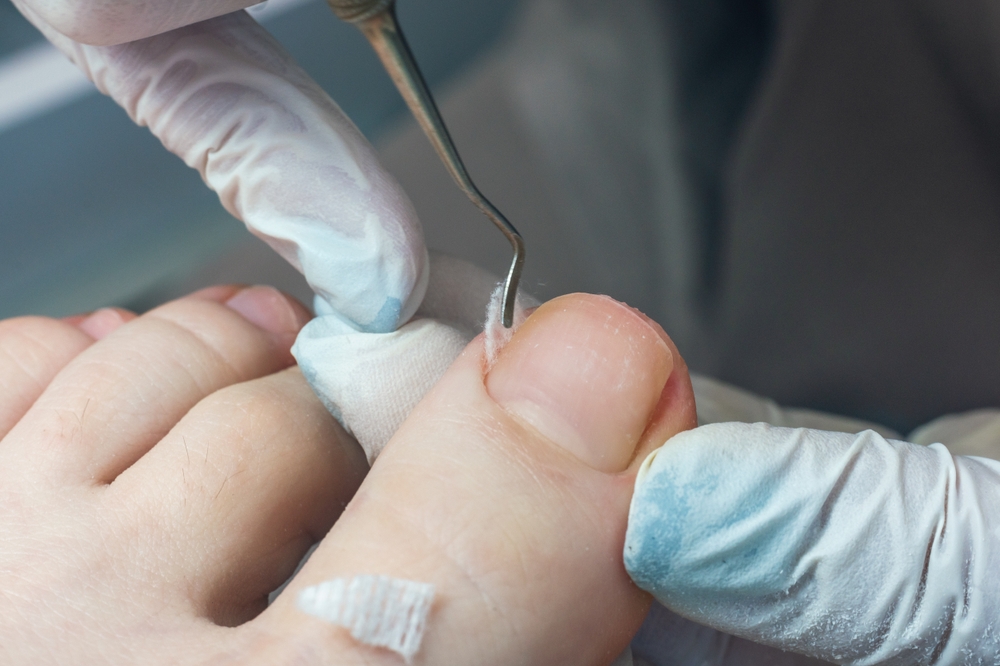
All ingrown toenail procedures are performed in-office under local anesthesia. The toe is numbed before the procedure begins. Most procedures take 10–15 minutes.
Temporary Nail Border Removal (Partial Nail Avulsion)
The offending edge of the nail — the portion that is growing into the skin — is cut back and removed. The nail fold is cleaned and dressed. The nail will regrow from the root over the following months.
When it is used: first-time ingrown toenails without significant recurrence history; patients who want to preserve the full width of the nail as it regrows; children whose nails are still developing.
Permanent Nail Border Removal (Matrixectomy)
The offending nail border is removed and the nail root (matrix) is chemically treated with phenol to permanently prevent that portion of the nail from regrowing. The nail appears slightly narrower afterward but looks normal in most footwear. The procedure eliminates recurrence on the treated border.
When it is used: recurrent ingrown toenails that have been treated before and returned; patients who want a permanent solution; cases with significant granulation tissue or chronic nail fold changes; any patient who does not want to manage the risk of recurrence.
Treating Infection
When an infected ingrown toenail is present, we address both the nail and the infection simultaneously. The infected border is removed under local anesthesia and the wound is cleaned. Depending on the severity of infection, oral antibiotics may be prescribed. We do not recommend attempting to treat an infected ingrown toenail with antibiotics alone without also removing the nail border — the source of the infection remains in place and the antibiotic effect is limited.
Special Considerations for Diabetic Patients
Ingrown toenails in patients with diabetes, peripheral neuropathy, or peripheral arterial disease require prompt professional management regardless of severity. Reduced sensation means the patient may not feel significant pain even as infection advances. Impaired immune response and poor wound healing create a risk of rapid spread from what would be a minor problem in a non-diabetic patient. Diabetic patients should not attempt home treatment of any ingrown toenail and should be evaluated within 24–48 hours of noticing any nail border discomfort.
Prevention
- Cut nails straight across: do not curve the corners to follow the shape of the toe. The nail edge should be even with or just past the tip of the toe, not cut below the nail fold. Use a clean nail clipper, not scissors or tearing.
- Do not cut too short: leaving the nail long enough that it extends slightly past the nail fold at the sides prevents the edge from embedding in the tissue.
- Wear shoes with adequate toe box room: chronic compression of the nail borders from narrow shoes is a major driver of recurrence.
- Treat toenail fungus: thickened, distorted nails from fungal infection are far more prone to ingrown edges. Treating active fungal nail infection reduces long-term ingrown toenail risk.
Frequently Asked Questions
Does the ingrown toenail procedure hurt?
The procedure itself is performed under local anesthesia — the toe is numbed with an injection before any nail work begins. Patients might feel pressure but not pain during the procedure. The injection itself causes a brief sting. Afterward, as the anesthesia wears off over a few hours, mild soreness is expected and managed well with Tylenol or Ibuprofen.
Will my nail grow back normally after the procedure?
After temporary removal, the full nail regrows over the following months. After a matrixectomy, only the treated border is permanently prevented from regrowing — the rest of the nail grows normally. The result is a slightly narrower nail that looks cosmetically normal in most shoes. The permanently treated border will not ingrow again.
My ingrown toenail keeps coming back. What should I do?
Recurrence after temporary removal is common, particularly in nails that are naturally curved or wide. If you have had the same nail border treated more than once, a permanent matrixectomy is the appropriate next step. It is a straightforward in-office procedure that eliminates the problem definitively rather than managing recurrences.
Can I treat an infected ingrown toenail at home?
No — not effectively. Antibiotics without removal of the nail border do not resolve the infection because the source of bacterial entry remains. Home attempts to remove the nail border typically worsen the wound and deepen the infection. An infected ingrown toenail needs professional treatment the same day or within 24 hours. If your regular podiatry office cannot see you promptly, contact us — same-day appointments are available for infected ingrown toenails at both our Coon Rapids and Golden Valley locations.
Ingrown Toenail Pain? We Can See You This Week — Often Same Day.
Most ingrown toenail procedures take 10–15 minutes in-office. You walk in with a painful toe and walk out with it treated. Book an appointment at our Coon Rapids or Golden Valley office.
Call 763-421-7300 or book online
Serving Coon Rapids, Golden Valley, Maple Grove, Ham Lake, Andover, Champlin, Blaine, Plymouth, Wayzata, Minnetonka, St. Louis Park, Edina, and all Twin Cities communities.