
You’ve Done Everything Right. So Why Does Your Foot Still Hurt?
You rested it. You iced it. You did the physical therapy. Maybe you had a cortisone injection, or two. Maybe you’ve been told it’s plantar fasciitis — or that the X-ray looks fine — or that you just need to give it more time. And yet months later, you’re still limiting your activity, still modifying how you walk, still waking up with the same heel or ankle or toe pain that started this whole thing.
That frustration is one of the most common things we hear from new patients. Foot and ankle pain that doesn’t resolve with standard treatment is not a personal failure — it is a clinical problem that deserves a fresh look. Sometimes the diagnosis is right but the treatment plan is incomplete. Sometimes the diagnosis is wrong entirely. Sometimes a structural problem is being managed symptomatically when it needs to be corrected. A second opinion is not a criticism of your prior care. It is a reasonable, appropriate step when you are not getting better.
We welcome second opinion visits. Our goal is to give you an honest assessment of where things stand — what we think is driving your pain, whether we agree with the current diagnosis, what options you haven’t tried yet, and what we would do differently if anything. If your current treatment plan is correct and just needs more time, we’ll tell you that too.
Call 763-421-7300 | Book online
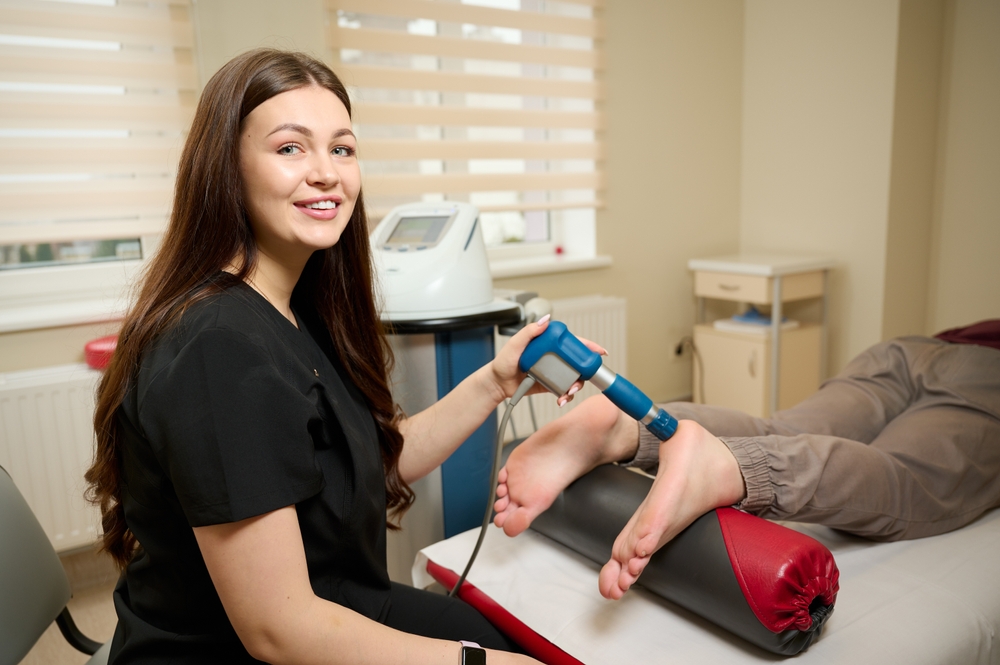
[WEB TEAM NOTE: Make phone number click-to-call (tel:7634217300). Green “Schedule Appointment” button below CTA. Hero image: a patient in consultation with a podiatrist — not a stock photo of a foot, but an actual clinical interaction image that conveys a listening, attentive provider.]
When a Second Opinion Makes Sense
A second opinion is appropriate any time you’re not comfortable with the path you’re on. More specifically, these are the situations we see most often:
- Pain that hasn’t improved after 6–8 weeks of consistent treatment. Rest, stretching, orthotics, and physical therapy should produce measurable improvement within this window for most acute conditions. If they haven’t, something about the diagnosis or the plan deserves reconsideration.
- A diagnosis you don’t fully understand or that doesn’t explain your symptoms. “Your X-ray looks fine” is not a diagnosis. “It’s probably just tendinitis” is not a treatment plan. If you left an appointment confused about what you have or what to do next, that is worth following up on.
- Pain after a cortisone injection that only partially helped, or that returned. A cortisone injection that wears off quickly or doesn’t fully resolve the problem is useful clinical information — it tells you something about the nature of the underlying problem that changes what should come next.
- Ongoing pain after foot or ankle surgery. Post-surgical pain beyond the expected recovery window can have several causes: incomplete healing, an underlying structural issue that wasn’t addressed, hardware irritation, scar tissue, or nerve involvement. Each has a different management approach.
- You’ve been told surgery is the only option but you’re not sure. Surgery is sometimes the right answer — but not always the only answer. A second opinion before committing to a procedure gives you the information to make that decision with confidence, not uncertainty.
- Multiple providers, multiple opinions, no clear consensus. If you have seen several providers and gotten different or conflicting answers, a systematic re-evaluation from the beginning — clinical exam, weight-bearing X-rays, and a review of your full history — can often clarify what the others couldn’t.
What Happens at a Second Opinion Visit
A second opinion visit is a full evaluation, not a quick look. We start from the beginning rather than assuming the prior diagnosis is correct. The visit typically includes:
A Thorough History
We want to understand exactly how and when your pain started, what makes it better or worse, what you’ve already tried and how well it worked, what imaging and testing you’ve had, and what you were told. Bring any prior X-rays, MRI or ultrasound reports, or clinical notes you have — the more context we have, the more useful the visit.
A Complete Physical Examination
We assess your foot and ankle structure, alignment, range of motion, strength, and gait — weight-bearing, not just lying on a table. Many structural problems are only apparent when the foot is loaded. We palpate for the specific locations and qualities of tenderness that distinguish one condition from another, and we perform any relevant clinical tests for the conditions we’re considering.
Imaging Review and Additional Imaging Where Needed
We review any prior imaging you bring. In most cases we take our own weight-bearing X-rays at the visit, because they show the foot’s alignment under load in a way that non-weight-bearing films do not. If the clinical picture suggests a soft tissue problem — tendon tear, neuroma, plantar fibroma, ligament injury — we may order more advanced imaging.
A Clear Explanation and a Concrete Plan
At the end of the visit, you will know what we think is causing your pain, whether we agree with the prior diagnosis, what options exist — conservative, procedural, and surgical — and what we recommend. If we think your current provider and plan are appropriate, we will tell you that. If we think something different is needed, we will tell you that too, and explain why.
Common Reasons Foot Pain Doesn’t Resolve With Standard Treatment
In our experience, unresolved foot and ankle pain usually falls into one of a handful of patterns:
- Correct diagnosis, incomplete treatment. Plantar fasciitis treated with stretching alone — without addressing footwear, gait mechanics, or load management — often improves partially and then plateaus. The diagnosis is right but the plan doesn’t address all the contributing factors.
- Wrong diagnosis. Tarsal tunnel syndrome, stress fractures, peroneal tendon tears, and accessory navicular syndrome are all conditions that can be misdiagnosed as plantar fasciitis, Achilles tendinitis, or ankle sprain because the initial evaluation was incomplete. The wrong diagnosis produces the wrong treatment.
- Structural cause that hasn’t been identified. High-arch foot (pes cavus), adult-acquired flatfoot (PTTD), or significant leg length discrepancy can drive pain in the heel, ankle, knee, and even the lower back — but are easily missed if a provider is focused on the site of pain rather than the underlying mechanics producing it.
- Nerve involvement. Tarsal tunnel syndrome, peripheral neuropathy, and nerve entrapment conditions produce pain, burning, and tingling that can mimic or coexist with more common conditions. They are often under-recognized and respond to completely different treatments than tendon or fascia conditions.
- Post-surgical scarring or hardware issues. After foot or ankle surgery, scar tissue formation, nerve irritation, hardware prominence, and incomplete structural correction are all recognized causes of persistent pain. These require direct evaluation rather than continued conservative management.
- Pain that requires a non-conservative intervention that hasn’t been offered. Some conditions — plantar fasciitis beyond 12 months, insertional Achilles tendinopathy with calcification, sesamoid non-union — do not reliably resolve with conservative care alone. Shockwave therapy (EPAT), minimally invasive procedures, or surgery may be the appropriate next step and may not have been presented as an option.
Ongoing Pain After Foot or Ankle Surgery
Post-surgical pain is one of the most distressing situations a patient can be in: you underwent a procedure to fix the problem, and you still hurt. The causes are usually identifiable with a thorough evaluation, and many are treatable. Common causes we assess include:
- Incomplete healing of the bone or soft tissue beyond the expected window, particularly in patients with diabetes, osteoporosis, poor circulation, or nutritional deficiencies.
- Scar tissue and fibrosis in the soft tissue around the surgical site, which can compress adjacent nerves or tendons.
- Hardware irritation from screws, plates, or anchors that are prominent or impinging on adjacent structures.
- Adjacent joint or tendon stress from altered mechanics after the primary procedure — fixing one problem sometimes transfers load to a neighboring structure.
- Nerve sensitization or complex regional pain syndrome (CRPS) in a subset of patients who develop disproportionate or widespread pain after surgery. This requires a different management approach than mechanical post-surgical problems.
Bring your operative report if you have it. Knowing exactly what was done — what structures were repaired, what hardware was used, what the intraoperative findings were — is essential context for evaluating persistent post-surgical pain. If you don’t have it, we can help you request it from the prior facility.
What to Bring to Your Second Opinion Visit
- Any prior X-rays, MRI, CT, or ultrasound imaging — on disc/USB or with access to an imaging portal
- Radiology reports for any imaging you’ve had
- Operative report and any post-operative notes if you’ve had foot or ankle surgery
- A list of treatments you’ve tried and how well each helped
- Current medications, including any supplements or topicals you use for pain
- Comfortable footwear that you can walk in — we will assess your gait
Don’t have all of this? Come anyway. We can request records and imaging from prior providers. Incomplete records should not stop you from seeking a second opinion. The clinical exam and our own imaging often tell us what we need to know.
Frequently Asked Questions
Will my primary podiatrist or referring provider know I’m seeking a second opinion?
Only if you choose to tell them or if you request that we send records. A second opinion visit is confidential, and you are under no obligation to inform a prior provider that you are seeking one. Many patients bring the outcome of a second opinion back to their original provider as a starting point for a conversation about changing the treatment plan.
Does insurance cover a second opinion visit?
In most cases, yes — a second opinion visit is billed as a new patient evaluation, which is covered by most insurance plans the same way any other podiatric visit is. We recommend verifying your specific benefit with your insurance carrier before the visit. We are in-network with most major plans.
What if you agree with what my prior provider told me?
Then we will tell you that, explain why, and give you our best advice on what to do from here. A second opinion that confirms the original diagnosis is still valuable — it gives you confidence that you are on the right path, or helps you understand what “give it more time” actually means in your specific case. We are not in the business of finding something to treat just because you came in for a second look.
I’ve had this pain for years. Is it too late to do something about it?
Rarely. Chronic foot and ankle pain — even pain that has been present for years — is usually still addressable. Some interventions become more effective, not less, once the acute phase has long passed. Shockwave therapy (EPAT) for chronic plantar fasciitis and Achilles tendinopathy, for example, works best in the chronic non-healing state. Structural corrections that would have been optional early on may have become more clearly indicated. The length of time you’ve had pain changes what options we discuss, but rarely eliminates them.
Ready for a Fresh Start? Let’s Take a Clear Look at What’s Actually Going On.
If you’ve been managing foot or ankle pain without getting the answers or results you need, a second opinion is a reasonable next step — not a last resort. Book an appointment at our Coon Rapids or Golden Valley office. Same-week appointments are typically available.
Call 763-421-7300 | Book online
Serving Coon Rapids, Golden Valley, Maple Grove, Ham Lake, Andover, Champlin, Blaine, Plymouth, Wayzata, Minnetonka, St. Louis Park, Edina, and all Twin Cities communities.