
Found Out You Have a Bone Spur on Your Heel — Now What?
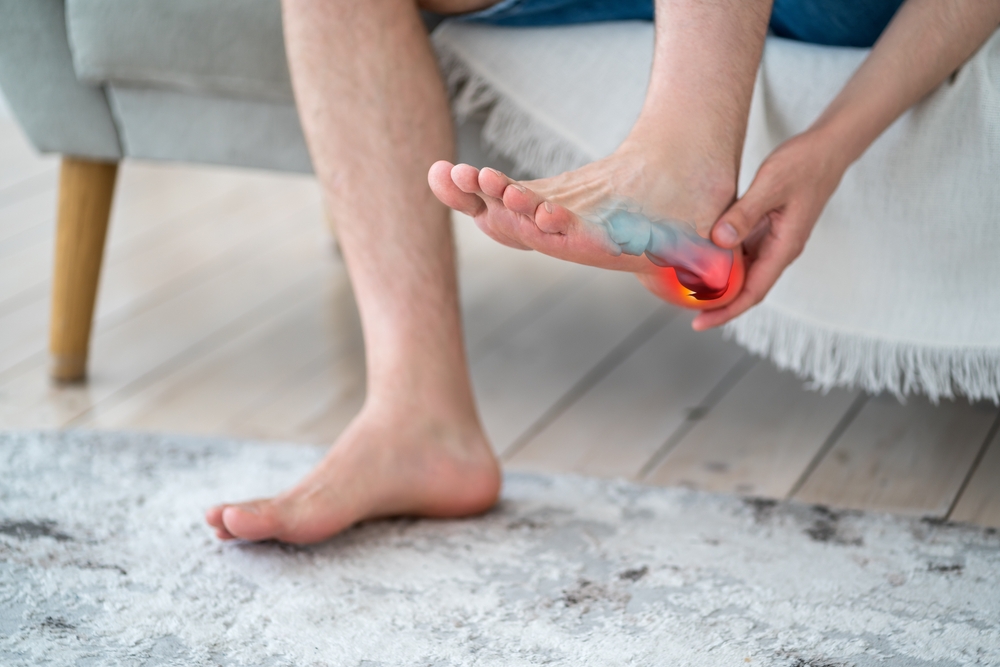
Hearing that you have a heel spur can feel alarming. A bone spur sounds serious, maybe even like something that needs surgery. But in most cases, it is neither. A heel spur is a small calcium deposit on the underside (or back of) the heel bone — and the majority of people who have one never feel it at all.
What actually hurts in most cases is not the spur itself but the inflamed tissue surrounding it, almost always the plantar fascia. Understanding that distinction changes everything about how you treat it. Our podiatrists diagnose and treat heel spurs every day at our Coon Rapids and Golden Valley offices, serving patients across the north and west metro including Maple Grove, Ham Lake, Andover, Champlin, Blaine, Plymouth, Wayzata, Minnetonka, St. Louis Park, and Edina.
Heel pain that has persisted for more than two or three weeks is worth evaluating.
Many patients spend months treating the wrong thing. A proper diagnosis gets you on the right path faster.
Call 763-421-7300 or Book Online
What Is a Heel Spur?
A heel spur (also called a calcaneal spur) is a bony protrusion that forms on the calcaneus — your heel bone — where a ligament or tendon attaches. It develops gradually, over months or years, as the body deposits calcium in response to repeated pulling and stress at that attachment point.
There are two main types. An inferior heel spur forms on the bottom of the heel, almost always where the plantar fascia attaches. This is the most common type and is closely associated with plantar fasciitis. A posterior heel spur forms at the back of the heel where the Achilles tendon inserts, and is more commonly associated with Achilles tendinopathy and Haglund’s deformity. The two are treated differently, which is one reason getting the right diagnosis matters.
Here is what surprises most patients: research consistently shows that heel spurs appear on imaging in roughly 15–25% of the general population, most of whom have no pain. The spur is a marker that stress has occurred at that site — it is not the direct source of pain in the majority of cases. The pain comes from the inflamed and irritated tissue around the spur. (More on how we diagnose this below.)
Not all heel pain is a heel spur, and not all heel spurs cause pain. Plantar fasciitis, Achilles tendinopathy, stress fractures, nerve entrapment, and bursitis can all produce heel pain without a spur present, or alongside one. An accurate exam is the only way to know which one you are actually dealing with.
What Causes Heel Spurs?
Heel spurs develop slowly as a response to mechanical stress. The same factors that cause plantar fasciitis and/or achilles tendonitis also tend to cause heel spurs, which is why these diagnoses so often go hand in hand:
- Flat feet or overpronation — the arch collapses with each step, putting chronic tension on the plantar fascia and/or achilles at their heel attachments
- High-arched feet — less shock absorption means more impact force concentrated at the heel
- Long periods of standing or walking, especially on hard floors
- Worn-out or unsupportive footwear that lacks cushion and arch support
- Excess weight, which increases the load through the heel with every step
- Tight calf muscles, which increase tension through the Achilles and plantar fascia
- A sudden increase in activity, mileage, or time on your feet
- Age — the fat pad under the heel thins over time, reducing natural cushioning
Symptoms of Inferior Heel Spurs
When an inferior heel spur is symptomatic, the pain pattern usually looks like this:
- Sharp or stabbing pain on the bottom of the heel, especially with the first steps in the morning
- Pain that eases after a few minutes of walking, then returns after long periods on your feet
- A dull, persistent ache that worsens after activity rather than during it
- Tenderness when pressing directly on the heel
- Pain when standing after sitting for an extended period
- Occasional swelling or warmth at the base of the heel
If that pattern sounds familiar, it is worth noting that this is also a classic description of plantar fasciitis. The two conditions are so closely related that many patients have both. An X-ray can confirm the spur; ultrasound tells us the condition of the soft tissue.
One important distinction: pain at the back of the heel (where the Achilles meets the heel bone) rather than the bottom points toward a posterior spur, Achilles tendinopathy, or Haglund’s deformity — different conditions with different treatments. Bottom of the heel pain is most likely an inferior spur with plantar fasciitis. Tell us exactly where it hurts when you call.
How Are Heel Spurs Diagnosed?
Diagnosis starts with a hands-on exam. We review your history, watch how you walk, assess your arch and range of motion, and press on specific points around the heel to identify where the pain is coming from and what structure is involved. That alone is usually enough to give us a working diagnosis.
When we need to confirm or look more closely, we use:
- X-ray — the definitive way to confirm a heel spur. A spur shows clearly on a lateral view of the heel. We also use X-rays to rule out stress fractures and other bony pathology.
- Diagnostic ultrasound — occasionallyperformed in the office, ultrasound lets us see the plantar fascia directly — how thick it is, whether it is inflamed or torn, and what the soft tissue around the spur looks like.
- MRI — occasionally ordered when the diagnosis is uncertain, symptoms are severe, or we need to rule out a stress fracture or other deep tissue problem.
One important note: a spur on X-ray does not automatically mean the spur is causing the pain. We use the full clinical picture — exam findings, imaging, and your symptom pattern — to determine what is actually driving your heel pain and target treatment accordingly.
Treatment Options at Family Foot & Ankle Clinic
The goal of treatment is not to remove the spur — in the vast majority of cases, that is unnecessary. The goal is to address the inflamed tissue, reduce mechanical stress on the heel, and give the area a chance to heal. Here is how we approach it:
Tier 1 — First-Line Home Care
Rest and activity modification. Temporarily scaling back the activities that load the heel — running, prolonged standing, high-impact exercise — lets the inflammation settle. You do not have to stop moving; low-impact alternatives like swimming or cycling work well.
Supportive footwear. Shoes with a firm heel counter, good arch support, and a slightly raised heel with stiff soler and forefoot rocker reduce stress at the plantar fascia attachment. Avoid flat shoes and bare feet on hard floors. See our Shoe Recommendations Guide for current picks.
Ice or heat — know which to use. Ice after activity when the heel is hot and throbbing (15 minutes, towel between ice and skin). Heat before stretching in the morning or evening to loosen tight tissue. Most patients with chronic heel spur pain benefit more from heat before stretching than from icing alone.
Stretching. Calf stretches and plantar fascia stretches — performed before your first steps each morning and throughout the day — are among the most effective tools for relieving heel pain. See our Plantar Fasciitis Home Care Program for the full stretching and foam rolling routine; it applies directly to heel spur pain as well.
Anti-inflammatories. Over-the-counter ibuprofen or naproxen can reduce pain and inflammation short-term. Follow package directions and check with us if you have any concerns about using them.
Tier 2 — In-Office Treatments
When home care is not moving the needle after a few weeks, we have additional options:
Custom orthotics. This is often the most important intervention for a heel spur driven by flat feet or overpronation. A custom orthotic redistributes load away from the plantar fascia attachment at the heel, addressing the mechanical cause directly rather than just the symptom. For the right patient, orthotics change the trajectory of this condition. More on our Custom Orthotics page.
Heel cushions and padding. A well-fitted heel cup or soft padding offloads the painful area and provides immediate relief in many patients, particularly those with thinning heel fat pads.
Cortisone injection. A targeted injection into the inflamed tissue around the spur reduces acute inflammation and pain. We use these selectively — they manage symptoms effectively but do not address the underlying structural cause, so they work best as part of a broader treatment plan.
Night splint. If morning pain is the worst part of your day, a night splint holds the fascia in a gently stretched position overnight so it does not tighten up while you sleep. Significant reduction in morning pain is usually noticeable within 1–2 weeks of consistent use.
Walking boot. For a severely inflamed heel, a short period in a removable boot takes the load completely off the area and allows the tissue to settle.
Physical therapy. A targeted PT program addresses calf tightness, foot mechanics, and intrinsic foot strength — the upstream contributors to heel spur pain.
Tier 3 — Advanced Option: Shockwave Therapy (EPAT)
Shockwave therapy (EPAT). Heel spurs that have not responded to conservative treatment are one of the strongest applications for shockwave therapy. Here is why: shockwave is most effective on tissue that has become chronically thickened and scarred — which is exactly what happens at the plantar fascia attachment in long-standing heel spur syndrome. It sends acoustic pressure waves into the tissue to stimulate the body’s own healing response and break down the calcified and fibrotic changes that conservative care alone cannot resolve. It is non-invasive, requires no needles or surgery, and most patients walk out after each session. A typical course is six sessions. Importantly, shockwave is worth considering sooner rather than later in the chronic phase — waiting until everything else has failed means the tissue has had more time to scar, not less. Insurance typically does not cover shockwave; it is offered as a cash-pay service with package pricing available. → See our Shockwave Therapy (EPAT) page.
When Is Surgery Needed?
Surgery for a heel spur is genuinely rare — fewer than 5% of patients require it. It is considered only after an extended course of conservative treatment has failed to produce meaningful improvement. When surgery is necessary, the procedure typically involves releasing the plantar fascia through a small incision; the bone spur itself is not typically removed.
The important thing to know is that having a spur on X-ray does not mean you are heading toward surgery. The overwhelming majority of patients with symptomatic heel spurs get better with the treatments described above. Our goal is always to exhaust every conservative option first, and most patients never reach this conversation.
Long-Term Care & Prevention
Once the pain is under control, keeping it that way comes down to a few consistent habits:
- Stay in supportive shoes — avoid flat shoes, bare feet on hard floors, and worn-out footwear that no longer provides structure
- Keep up the calf and arch stretching routine even after pain resolves — the tightness that drove the problem does not fix itself
- Wear your custom orthotics as directed — they are correcting the mechanics that created the spur in the first place
- Build activity levels gradually rather than ramping up suddenly after a period of rest
- Manage weight if it was a contributing factor — every pound of body weight adds roughly three pounds of force through the heel with each step
- Replace athletic shoes every 300–500 miles or when the midsole shows visible compression
Frequently Asked Questions
Is a heel spur the same thing as plantar fasciitis?
Not exactly, but they are closely related. Plantar fasciitis is inflammation of the plantar fascia. A heel spur is a bony deposit that forms at the same site where the fascia attaches to the heel bone. The two often coexist — the spur forms because the fascia has been chronically pulling at that attachment point. Most of the pain people attribute to a heel spur is actually coming from the inflamed fascia. Treatment targets both.
My X-ray shows a heel spur but I don’t have much pain. Should I treat it?
Not necessarily. If it is not causing symptoms, a spur does not require treatment. That said, the mechanical factors that allowed the spur to form — foot structure, footwear, tightness — are still present. Addressing those proactively (supportive shoes, stretching, possibly orthotics) is reasonable and can prevent symptoms from developing later.
Can a heel spur go away on its own?
The bony spur itself does not dissolve or reabsorb. However, the pain from a symptomatic heel spur absolutely can resolve with the right treatment. Most patients achieve full or near-full relief without surgery. The goal of treatment is not to remove the spur but to calm the inflamed tissue around it and correct the mechanics that caused it.
How long does it take to get better?
Most patients notice meaningful improvement within 6–8 weeks of consistent conservative treatment. Long-standing cases or those with significant tissue thickening may take 3–6 months. Starting earlier produces better outcomes — the longer the tissue has been inflamed and thickened, the longer it takes to respond.
Does shockwave therapy actually work for heel spurs?
Yes, and it is particularly well-suited to heel spur syndrome because of how it works. Shockwave targets the chronically thickened and calcified tissue that builds up at the plantar fascia attachment — stimulating healing rather than masking pain. Studies show success rates around 70–80% for chronic cases. The earlier in the chronic phase it is used, the better the tissue responds.
I’ve had heel pain for years. Is it too late to treat it?
It is not. Chronic heel spur pain — even pain that has been present for years — often responds well to treatment, particularly shockwave therapy, once the right diagnosis is established. If you have already been treated elsewhere without improvement, our Second Opinion / Foot Pain Not Improving visit is designed for exactly this situation.
Heel Pain That Won’t Go Away? Let’s Find Out Why
A heel spur diagnosis is not the end of the road — for most patients, it is the beginning of getting the right treatment. Book an appointment at our Coon Rapids or Golden Valley office and we will tell you exactly what is going on and build a plan around it.
Call 763-421-7300 or Book Online
Serving Coon Rapids, Golden Valley, Maple Grove, Champlin, Blaine, Plymouth, Andover, Wayzata, Minnetonka, Edina, and all Twin Cities communities.
Related Services & Conditions
- Plantar Fasciitis
- Shockwave Therapy (EPAT)
- Custom Orthotics
- Achilles Tendinitis & Tendinopathy
- Haglund’s Deformity
- Second Opinion / Foot Pain Not Improving
Patient Resources
Heel spur treatment overlaps significantly with plantar fasciitis care. The following downloads apply directly:
Full exercise program and daily routine: familyfootmn.com/plantar-fasciitis-exercises/