
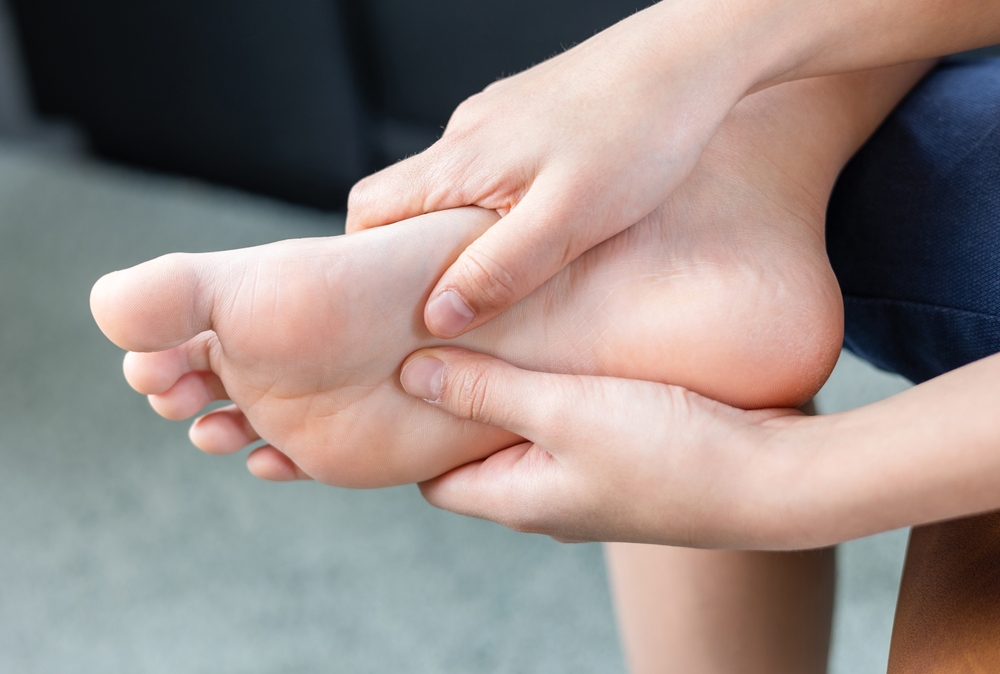
Pain in the Ball of Your Foot — What Is Causing It and Why It Matters
Ball-of-foot pain is one of the most common forefoot complaints in podiatry, and one of the most commonly oversimplified. “Metatarsalgia” is technically a description — pain at the metatarsal heads — not a diagnosis. Several distinct conditions produce it, and they require different treatment. A patient with a metatarsal stress fracture needs non-weight-bearing. A patient with a plantar plate tear needs specific orthotic accommodations. A patient with Morton’s neuroma responds to injection therapy. Managing all of them the same way produces poor results.
Our approach at Family Foot & Ankle Clinic starts with identifying exactly what is causing your ball-of-foot pain, rather than treating the symptom in isolation. We serve patients across the north and west metro from our Coon Rapids and Golden Valley offices, including Maple Grove, Champlin, Blaine, Plymouth, Wayzata, Minnetonka, and Edina.
Ball-of-foot pain that is focal and pinpoint, that came on after an increase in activity, or that is associated with swelling at a specific metatarsal head warrants imaging. A stress fracture in this location requires protected weight-bearing, not just activity modification. If your forefoot pain has not improved with footwear changes over 2–3 weeks, get it properly evaluated.
Call 763-421-7300 or book online
What Causes Ball-of-Foot Pain?
The metatarsal heads — the rounded ends of the five long metatarsal bones where they meet the toes — bear significant load with every step, particularly during push-off. Multiple distinct conditions can cause pain in this region. Getting the right diagnosis is the first step to the right treatment:
- Metatarsalgia (primary load overload): diffuse aching and burning across the ball of the foot caused by excessive or abnormal pressure distribution across the metatarsal heads. Not a single structural lesion — rather the result of a forefoot loading problem that may be driven by foot structure, footwear, or activity. The most common cause of general ball-of-foot pain.
- Morton’s neuroma: burning, tingling, or the “pebble in the shoe” sensation between the toes from a thickened, irritated intermetatarsal nerve. Neurological symptoms (numbness, shooting pain into the toes) distinguish this from pressure-based metatarsalgia. See our Morton’s Neuroma page.
- Sesamoiditis or sesamoid fracture: pain specifically under the first metatarsal head at the base of the big toe, from inflammation or fracture of the sesamoid bones. Distinct location from general metatarsalgia. See our Sesamoid Injuries page.
- Metatarsal stress fracture: focal, pinpoint tenderness at a specific metatarsal shaft that worsens progressively with activity. Requires imaging (often MRI as X-ray is initially negative). Requires protected weight-bearing, not just rest. See our Stress Fractures page.
- Plantar plate tear: injury to the ligament on the undersurface of the second (or third) MTP joint, causing instability, pain, and eventually crossover toe deformity. Often mistaken for metatarsalgia or neuroma. Requires a specific clinical test (drawer test) and often MRI to identify.
- Freiberg’s infraction: avascular necrosis of the second (occasionally third) metatarsal head, most common in adolescent girls and young women. The metatarsal head collapses from loss of blood supply, causing chronic forefoot pain that worsens with activity. X-ray diagnosis; surgical intervention in severe cases.
If you have been told you have “metatarsalgia” without a specific diagnosis: ask what is causing the forefoot overload. Metatarsalgia is a description of where it hurts, not an explanation of why. A complete evaluation — including gait assessment, foot structure analysis, and imaging where indicated — identifies the specific driver and allows targeted treatment.
What Drives Forefoot Overload?
When a specific structural lesion (neuroma, stress fracture, sesamoid injury) has been excluded, the forefoot pain is usually driven by one or more of the following:
- Foot structure: a high arch (cavus foot) concentrates load at the metatarsal heads rather than distributing it across the entire foot. A prominent or long second metatarsal (Morton’s foot type) creates excessive loading at that head specifically.
- Hammer or claw toes: when toes are curled upward, the MTP joint is extended and the metatarsal head is forced downward, concentrating pressure under that spot with every step.
- Bunion deformity: as the first metatarsal drifts medially, it transfers load to the second metatarsal head, which is structurally less equipped to handle it.
- Inappropriate footwear: high heels shift body weight onto the forefoot; thin-soled shoes provide no cushioning; tight toe boxes compress the metatarsal heads together.
- Activity and training load: sudden increases in running mileage, prolonged standing on hard surfaces, and high-impact forefoot-dominant activities (dance, plyometrics) overload the forefoot beyond its capacity to adapt.
- Loss of fat pad: the natural fat pad under the metatarsal heads thins with age, reducing the foot’s natural shock absorption and increasing vulnerability to forefoot pain.
Symptoms
- Aching, burning, or sharp pain in the ball of the foot, typically under the second, third, or fourth metatarsal heads
- Pain that worsens with standing, walking, or running and improves with rest and removal of shoes
- A sensation of walking on pebbles or marbles under the forefoot (distinguish from Morton’s neuroma by location — metatarsalgia is under the metatarsal heads; neuroma is between them)
- Callus formation under the painful metatarsal head from abnormal pressure concentration
- Pain with barefoot walking on hard surfaces that is significantly relieved by cushioned footwear
Important distinction: diffuse aching across the ball of the foot that is worse with pressure and better with cushioning is typical of primary metatarsalgia. Neurological symptoms — burning, tingling, numbness into the toes — suggest Morton’s neuroma. Focal pinpoint tenderness at one metatarsal shaft suggests stress fracture. Each requires a different workup.
Diagnosis
Diagnosis starts with a thorough examination: precise location of tenderness (shaft vs. head vs. interspace), assessment of foot structure and toe deformity, evaluation of callus pattern (which reveals habitual pressure distribution), and gait analysis. The drawer test for plantar plate integrity is performed when MTP joint instability is suspected.
- X-ray — weight-bearing views identify metatarsal alignment, length pattern, stress fracture (after 2–3 weeks), and arthritic changes at the MTP joints.
- Ultrasound — in-office assessment for Morton’s neuroma, plantar plate tears, and MTP joint effusion. Faster and more cost-effective than MRI for these specific diagnoses.
- MRI — when stress fracture, Freiberg’s infraction, plantar plate tear, or avascular necrosis needs to be definitively characterized.
Treatment at Family Foot & Ankle Clinic
Treatment is targeted to the specific cause. The following applies to primary metatarsalgia — forefoot overload without a specific structural lesion. For neuroma, sesamoid injury, or stress fracture, see those dedicated pages.
Conservative Management
Footwear modification. The single most impactful change. A shoe with a wide toe box, adequate forefoot cushioning, and a rocker sole reduces peak pressure at the metatarsal heads. High heels and thin-soled shoes should be avoided entirely during a symptomatic period. See our Shoe Recommendations Guide for current specific picks.
Metatarsal pad. A small pad placed just proximal to (behind) the metatarsal heads redistributes forefoot load by lifting the metatarsal shafts and reducing pressure at the heads. Available as an adhesive pad or built into a custom orthotic. Placement is critical — a pad placed directly under the metatarsal heads increases pressure rather than reducing it.
Custom orthotics. For patients with structural drivers — high arch, long second metatarsal, bunion deformity — a custom orthotic addresses the underlying load distribution problem rather than just cushioning the symptomatic area. A metatarsal pad, forefoot posting, or toe filler built into the orthotic provides sustained, precisely positioned off-loading. More on our Custom Orthotics page.
Activity modification. Temporarily reduce activities that concentrate load on the forefoot. Cross-train with swimming or cycling during the acute phase. Gradual return to full activity once symptoms are managed.
Callus management. We debride painful calluses under the metatarsal heads in-office. Recurring callus is a symptom of ongoing abnormal pressure — addressing the pressure source prevents recurrence.
NSAIDs and ice. Short-term NSAID use and ice (15 minutes, wrapped towel, after activity) reduce acute inflammation. Adjunctive, not definitive.
When Conservative Management Is Not Enough
When structural problems such as a prominent or long metatarsal, significant hammer toe deformity, or Freiberg’s infraction are driving the pain and conservative treatment is not providing adequate relief, surgical options exist:
- Weil osteotomy: shortening and elevation of an over-long or prominent metatarsal head to equalize forefoot load distribution. Highly effective for metatarsal length discrepancy driving load transfer.
- Hammertoe correction: straightening contracted toes reduces the MTP joint extension that forces the metatarsal head downward. Often combined with metatarsal surgery.
- Plantar plate repair: for confirmed plantar plate tears with MTP joint instability causing secondary metatarsalgia.
See our Foot & Ankle Surgery Overview for general information on surgical care at our clinic.
Frequently Asked Questions
Is metatarsalgia the same as a neuroma?
No, though they both cause forefoot pain. Metatarsalgia is pressure-based aching under the metatarsal heads. Morton’s neuroma causes burning, tingling, and neurological symptoms between the toes from nerve irritation. A neuroma feels like a pebble between the toes; metatarsalgia feels like a bruise under the ball of the foot. Both can coexist and are treated differently. An accurate diagnosis determines the right treatment.
Will metatarsalgia go away on its own?
It depends on whether the underlying cause is addressed. Metatarsalgia driven purely by a period of increased activity in poor footwear may settle with rest and footwear change. Metatarsalgia driven by structural foot mechanics — high arch, long second metatarsal, hammertoes, bunion — will persist or recur without addressing those mechanics. Rest without correction leads to repeated cycles of the same pain.
I have pain under my second toe specifically, not across the whole ball of my foot. What could that be?
Focal pain under a single metatarsal head — particularly the second — has a specific differential: stress fracture, plantar plate tear, or Freiberg’s infraction are all possibilities alongside metatarsalgia. Each is managed differently. Focal single-metatarsal pain warrants imaging (X-ray and usually MRI) rather than empirical treatment as general ball-of-foot pain. If you have been told it is metatarsalgia without imaging, our Second Opinion / Foot Pain Not Improving visit is appropriate.
Ball-of-Foot Pain That Isn’t Getting Better? Let’s Find Out Exactly What’s Causing It.
The right treatment for forefoot pain depends entirely on the right diagnosis. Book an appointment at our Coon Rapids or Golden Valley office and we will evaluate your foot mechanics, identify the specific driver of your pain, and give you a targeted plan.
Call 763-421-7300 or book online
Serving Coon Rapids, Golden Valley, Maple Grove, Champlin, Blaine, Plymouth, Andover, Wayzata, Minnetonka, Edina, and all Twin Cities communities.