
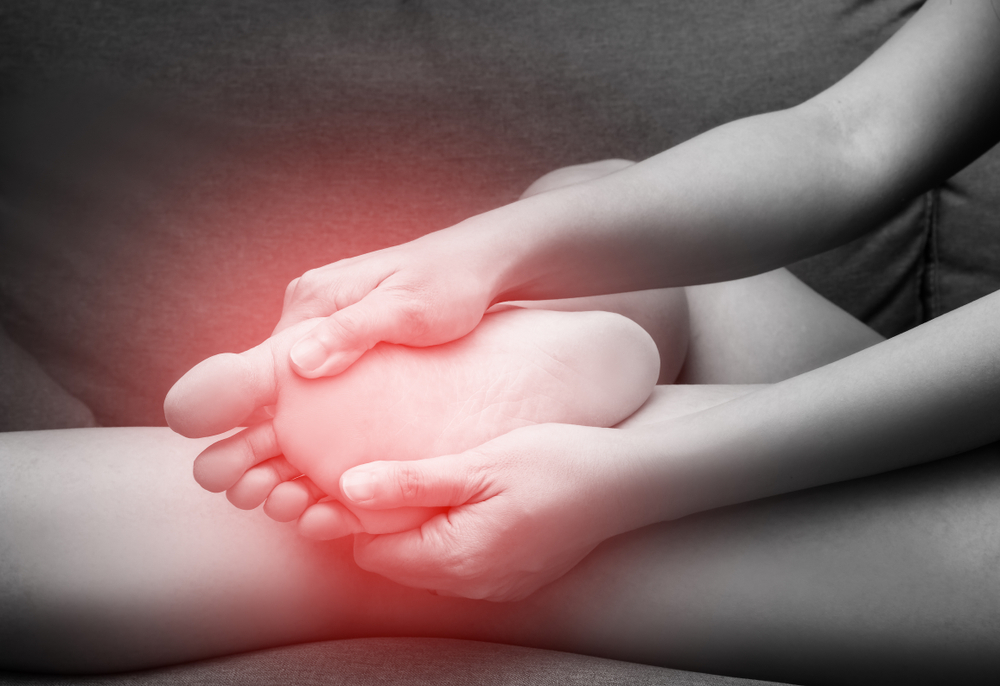
Pain Under the Ball of Your Foot at the Big Toe — Sharp, Persistent, Worse With Push-Off
The sesamoids are two small bones embedded in the tendon under the first metatarsal head, at the base of the big toe. They act as a pulley for the flexor hallucis brevis tendon, absorb impact with every step, and transmit the push-off forces of walking and running through the big toe. Small bones doing a large job in a high-load location — which is exactly why they are vulnerable.
Sesamoid pain is most common in dancers, runners, and athletes who spend significant time on the ball of the foot, but it occurs in anyone who overloads the forefoot or sustains a direct impact to the area. Our podiatrists diagnose and treat sesamoid injuries at our Coon Rapids and Golden Valley offices, serving patients across the north and west metro including Maple Grove, Ham Lake, Andover, Champlin, Blaine, Plymouth, Wayzata, Minnetonka, St. Louis Park, and Edina.
Pain under the first metatarsal head that has lasted more than two to three weeks, worsens with push-off or high-heeled shoes, and does not improve with rest should be evaluated. Sesamoid stress fractures and avascular necrosis can progress significantly without treatment. Early identification changes the management approach and avoids surgical complications.
Call 763-421-7300 or book online
What Are Sesamoid Injuries?
Four distinct conditions affect the sesamoid bones, and they are not all treated the same way:
| Condition | What Is Happening | Typical Patient | Key Notes |
| Sesamoiditis | Inflammation of the sesamoid bones and surrounding tissue. No fracture present. | Runners, dancers, patients who increase forefoot loading. Gradual onset. | The most common sesamoid condition. Responds well to offloading, modified activity, and orthotics. Usually resolves without surgery. |
| Sesamoid stress fracture | Repetitive loading produces a stress fracture in one sesamoid (tibial sesamoid most common). Gradual onset like other stress fractures. | Distance runners, military recruits, dancers. Often after sudden increase in training load. | X-ray often normal initially. MRI is the diagnostic standard. Healing is slow — 6–12 weeks non-weight-bearing in resistant cases. High-risk for delayed union. |
| Acute sesamoid fracture | Direct impact or forced dorsiflexion fractures the sesamoid acutely. Sudden onset at time of injury. | Any patient with a fall, crush injury, or hyperextension of the great toe. | Must be distinguished from bipartite sesamoid on X-ray (see below). MRI confirms true acute fracture. |
| Avascular necrosis (AVN) | Blood supply to the sesamoid is disrupted, causing bone death and collapse. Most serious sesamoid condition. | Patients with prior stress fracture, corticosteroid injections, or prolonged high loading. Often develops after undertreated stress fracture. | MRI is required. May ultimately require sesamoidectomy if conservative management fails. |
The bipartite sesamoid: approximately 10–30% of the population has a sesamoid that developed in two parts rather than one — a normal anatomical variant called a bipartite sesamoid. On X-ray it can look exactly like a fracture, and the two are frequently confused. Key distinguishing features: bipartite sesamoids have smooth, rounded edges and are usually bilateral (check the other foot); fractures have sharp, irregular edges and no corresponding finding on the opposite side. MRI definitively differentiates the two. Treating a bipartite sesamoid as a fracture leads to unnecessary immobilization; missing a fracture and treating it as a normal variant leads to non-union.
Causes & Risk Factors
- High-heeled or thin-soled shoes that concentrate load under the first metatarsal head
- High-arched (cavus) foot, which directs disproportionate pressure onto the sesamoid region
- Sudden increase in forefoot loading activity — new dance training, increased running mileage, hill work
- Sports requiring sustained forefoot loading — ballet, basketball, football, tennis, baseball catching
- Direct impact to the ball of the foot — stepping on a hard object, landing hard from a jump
- Hallux valgus (bunion) or hallux rigidus, which alter how load passes through the first metatarsal
Symptoms
- Pain directly under the ball of the foot at the base of the big toe, specifically under the first metatarsal head
- Pain with push-off, tip-toeing, wearing heels, or any activity that loads the forefoot
- Swelling and tenderness when pressing directly on the sesamoid region from below
- Pain that builds gradually with activity (sesamoiditis, stress fracture) or onset suddenly with an injury (acute fracture)
- Stiffness or reduced range of motion at the big toe joint, particularly with dorsiflexion (bending upward)
Important: sesamoid pain is specifically located under the first metatarsal head, not at the great toe joint or along the big toe itself. Diffuse ball-of-foot pain that is not centered on this precise location is more likely metatarsalgia or a neuroma. Precise point tenderness directly on the sesamoid is the key clinical finding.
Diagnosis
We pinpoint tenderness to the specific sesamoid (tibial on the inner side, fibular on the outer side), assess big toe range of motion, and evaluate foot type and forefoot loading pattern. Imaging is essential for all but the mildest presentations.
- X-ray — AP, lateral, and sesamoid axial views. Identifies fracture, AVN changes, and the bipartite variant. The sesamoid axial view is critical and is not part of a standard foot X-ray series — request it specifically.
- MRI — the gold standard. Differentiates sesamoiditis (bone marrow edema, no fracture line) from stress fracture (fracture line present) from AVN (bone death pattern). Definitively distinguishes acute fracture from bipartite sesamoid.
- Bone scan — useful when MRI is not available; identifies increased uptake at the sesamoid but cannot distinguish fracture from sesamoiditis as precisely as MRI.
Treatment at Family Foot & Ankle Clinic
Conservative Management
Sesamoid offloading. The primary intervention for sesamoiditis and early stress fractures. A dancer’s pad or sesamoid relief cut-out in the orthotic directs pressure away from the affected sesamoid. A rocker-bottom shoe or rigid-soled shoe reduces forefoot bend during walking. Custom orthotics with sesamoid accommodations provide more precise and durable offloading than generic padding.
Activity modification. Complete avoidance of the aggravating activity while maintaining fitness through non-impact alternatives. Swimming and cycling are typically well-tolerated. Any activity that loads the forefoot through push-off should be avoided until imaging shows improvement.
Immobilization. For sesamoid stress fractures and acute fractures, a non-weight-bearing period of 4–8 weeks (depending on severity) in a cast or boot allows the healing process to begin. Sesamoids have limited blood supply and are notoriously slow to heal — premature return to loading is the most common cause of delayed healing.
Footwear modification. Rigid-soled or rocker-bottom shoes eliminate the forefoot bend that compresses the sesamoid region during walking. Soft, thin-soled shoes and heels should be avoided throughout healing. See our Shoe Recommendations Guide.
Shockwave Therapy (EPAT) for Chronic Sesamoiditis and Delayed Healing
Shockwave therapy (EPAT). For sesamoiditis that has not responded to offloading and activity modification, or a sesamoid stress fracture with delayed healing, shockwave therapy promotes bone and soft tissue healing through targeted acoustic pressure waves. It is a meaningful option before considering sesamoidectomy. Non-invasive, in-office, no downtime, typically six sessions. Offered as a cash-pay service with package pricing available. → See our Shockwave Therapy (EPAT) page.
Surgical Management
Surgery is reserved for cases that fail conservative management after an adequate trial — typically 3–6 months of consistent offloading and activity restriction:
- Sesamoidectomy — surgical removal of the affected sesamoid. Most commonly performed for AVN or non-union stress fracture.
- Partial sesamoidectomy — removal of a portion of the sesamoid, preserving as much bone as possible to maintain tendon function.
Important consideration: removing the tibial sesamoid can cause a hallux valgus deformity (the big toe drifting outward towards 2nd toe); removing the fibular sesamoid can cause a hallux varus deformity (drifting inward towards center of body). These risks are discussed thoroughly before any surgical decision is made. Surgery is the last resort, not the first step.
See our Foot & Ankle Surgery Overview for general information on surgical care at our clinic.
Frequently Asked Questions
How long does sesamoid healing take?
Sesamoiditis with consistent offloading typically improves within 4–8 weeks. Sesamoid stress fractures take 6–12 weeks or longer, and some require extended non-weight-bearing. Avascular necrosis has the longest and most unpredictable timeline, sometimes requiring months of conservative management before surgical decisions are made. Sesamoids heal slowly because of their limited blood supply — patience and strict adherence to offloading are more important here than in most other foot conditions.
My X-ray shows a “split” sesamoid. Is it a fracture or bipartite?
This is one of the most common diagnostic challenges in foot care. Bipartite sesamoids have smooth, rounded edges and are typically present on both feet; fractures have sharp, irregular edges and correlate with symptoms and injury history. MRI resolves the question definitively and should be ordered whenever there is clinical uncertainty — the treatment difference is significant. If you have been told you have a fracture without MRI confirmation, or told it is “normal” despite significant pain, ask for MRI.
Can I keep dancing or running with a sesamoid injury?
With sesamoiditis that is early and mild, modified activity with proper offloading is sometimes possible. With a confirmed stress fracture or AVN, continued forefoot loading will worsen the injury and extend the recovery significantly. Most patients who try to manage through a sesamoid stress fracture end up with a longer total recovery than those who stop and allow healing to occur. The answer is activity-specific — ask us what is safe for your specific diagnosis.
Is sesamoidectomy a common surgery?
Sesamoidectomy is performed when all conservative options have been exhausted and the sesamoid has either failed to heal or has developed avascular necrosis. It is not a first-line treatment. If you have been told surgery is necessary, understanding whether adequate conservative management was truly completed is worth confirming. Our Second Opinion / Foot Pain Not Improving visit is appropriate before committing to a sesamoidectomy.
Ball-of-Foot Pain Under the Big Toe That Isn’t Going Away? Let’s Find Out What’s Happening.
Sesamoid injuries are manageable when caught early and treated correctly. The patients who struggle most are those who were misdiagnosed early — told it was a bipartite when it was a fracture, or told it was sesamoiditis when it was AVN. Getting precise imaging and the right diagnosis at the start makes all the difference. Book an appointment at our Coon Rapids or Golden Valley office.
Call 763-421-7300 | Book online
Serving Coon Rapids, Golden Valley, Maple Grove, Champlin, Blaine, Plymouth, Andover, Wayzata, Minnetonka, Edina, and all Twin Cities communities.
Related Services & Conditions
- Stress Fractures
- Broken Toe & Metatarsal Fractures
- Big Toe Arthritis (Hallux Rigidus)
- Custom Orthotics
- Shockwave Therapy (EPAT)
- Second Opinion / Foot Pain Not Improving