
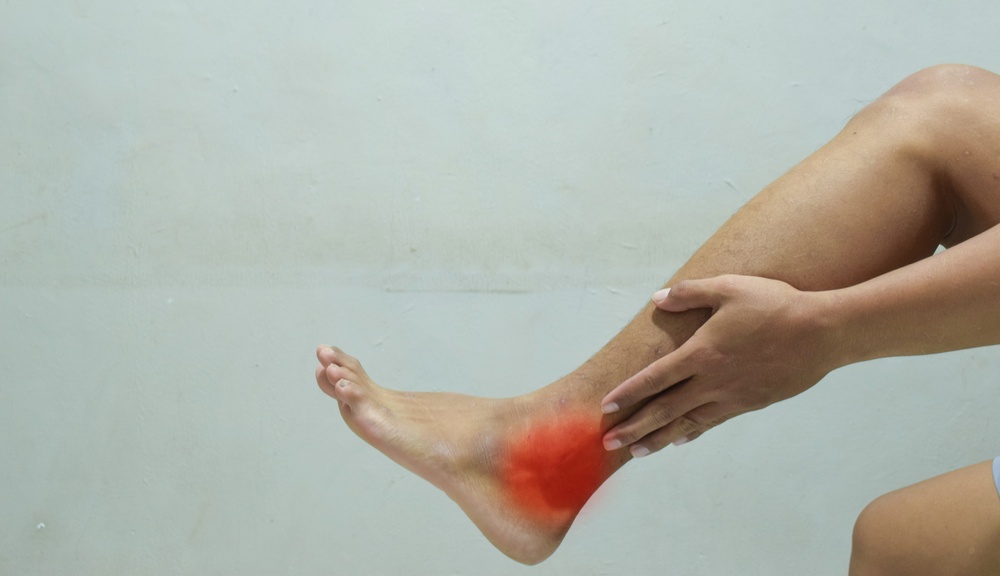
Is the Back of Your Heel Sore, Stiff, or Aching After Activity?
Pain along the back of your ankle, right where the Achilles tendon runs from your calf to your heel, is one of the most common overuse injuries we see. It often starts subtly: a little stiffness in the morning, some soreness after a run or a long day on your feet. Left alone, it tends to get worse rather than better, because the cause is usually a tendon that has been asked to do too much, too fast, for too long.
There are two related conditions that cause this kind of pain. Achilles tendinitis is acute inflammation of the tendon — it comes on relatively quickly and responds well to early treatment. If it is not addressed, it can progress to Achilles tendinosis, where the tendon tissue itself begins to degenerate and lose its organized structure. The treatment for each is different, which is why getting an accurate diagnosis matters. Our podiatrists treat Achilles tendon pain every day at our Coon Rapids and Golden Valley offices, serving patients across the north and west metro including Maple Grove, Ham Lake, Andover, Champlin, Blaine, Plymouth, Wayzata, Minnetonka, St. Louis Park, and Edina.
Achilles pain that has lasted more than two or three weeks, or any sudden sharp pain with a popping or snapping sensation, should be evaluated promptly. Tendinitis caught early is far easier to resolve than tendinosis that has been building for months — and a sudden snap could mean a partial or complete tear.
Call 763-421-7300 or Book Online
What Is the Achilles Tendon, and What Goes Wrong With It?
The Achilles tendon is the thick band of tissue connecting your calf muscle to your heel bone. It is the largest and strongest tendon in the body, and it does a lot of work — every time you walk, run, or rise onto your toes, the Achilles is transmitting the force that lifts your heel off the ground.
When that tendon is asked to handle a sudden increase in activity — more mileage, a new sport, a lot more time on your feet — the fibers can develop microscopic injury faster than your body can repair them. In the early stage, this shows up as Achilles tendinitis: inflammation, with pain and stiffness that responds reasonably well to rest, ice, and early intervention. If the stress continues without adequate recovery, the tendon can progress to Achilles tendinosis, where the tissue structure itself degenerates, loses organization, and develops small tears. The tendon may become noticeably thickened or develop nodules. In rare cases, chronic degeneration — with or without pain — can lead to a tendon rupture.
Where the pain occurs also matters. Insertional Achilles pain happens right where the tendon attaches to the heel bone. Mid-substance (non-insertional) pain happens higher up, in the body of the tendon itself. These two locations are treated somewhat differently, especially when it comes to exercise technique — more on that in the treatment section below.
What Causes Achilles Tendinitis and Tendinosis?
Both conditions are overuse injuries. The Achilles is generally very tolerant of normal daily activity, but it does not adapt well to sudden, large jumps in demand. Common contributing factors:
- A sudden increase in running mileage, intensity, or a new repetitive activity
- Being a “weekend warrior” — someone who is active only occasionally rather than consistently conditioned
- Jobs that put repetitive stress on the ankle and foot, such as physical labor
- Overpronation (flattening of the arch), which increases the demand placed on the tendon with every step
- Unsupportive or unstable footwear, which can worsen the effects of overpronation
- Tight calf muscles, which increase tension through the tendon with each stride
- Age-related changes in tendon elasticity and blood supply, which is why tendinosis becomes more common in middle age
- A history of corticosteroid injections near the tendon, which can weaken tendon tissue
Symptoms of Achilles Tendinitis and Tendinosis
The symptom pattern can show up anywhere along the tendon’s path, from its attachment just above the heel up to where it joins the calf muscle:
- Aching, stiffness, soreness, or tenderness along the tendon
- Pain that is often worst first thing in the morning or after a period of rest, eases somewhat with movement, then worsens again with increased activity
- Tenderness or even sharp pain when the sides of the tendon are squeezed — often less tenderness when pressing directly on the back of the tendon
- A tendon that feels thickened, enlarged, or has a noticeable lump or nodule (more common in tendinosis)
- Stiffness that is worse after sitting for a while, then improves as you start moving
- In more advanced cases, a creaking or crackling sensation with ankle movement
How Are Achilles Tendinitis and Tendinosis Diagnosed?
Diagnosis starts with a hands-on exam. We evaluate the range of motion of your foot and ankle, examine the tendon along its length, check exactly where your pain is located (insertional versus mid-substance matters for treatment), and assess your gait and calf flexibility.
To confirm the diagnosis and assess the extent of tendon involvement, we may use:
- X-ray — used to check for a heel spur at the insertion site, calcification within the tendon, or to rule out other bony causes of heel and ankle pain.
- Diagnostic ultrasound — occasionally performed in-office, ultrasound lets us see the tendon directly: how thick it is, whether there are tears, and whether the changes are more consistent with tendinitis or tendinosis. This distinction directly informs your treatment plan.
- MRI —used for more severe or persistent cases, or when a partial or complete tear is suspected.
Treatment Options at Family Foot & Ankle Clinic
Treatment depends on how long the tendon has been affected and how much tissue damage is present. In the early, acute stage, the goal is to calm inflammation. As the tendon strengthens, progressive loading becomes the priority.
Tier 1 — First-Line Home Care
Follow a structured home care program. Night splint use, heat and ice at the right times, foam rolling, and a phased stretching and strengthening progression all work together. See our Achilles Tendon Home Care Program below.
Activity modification. Reducing the repetitive activity that triggered the problem — without necessarily stopping movement altogether — lets the tendon settle. Low-impact alternatives like swimming or cycling are usually well tolerated.
Ice or heat — know which to use. Ice is the priority for a new, sharp onset. Heat before stretching and loading becomes more useful once you are weeks into a chronic, achy tendon. Our home care program includes the full guide so you are not guessing.
Supportive footwear. Shoes with a firm heel counter, adequate support, and rocker design reduce strain on the tendon. See our Shoe Recommendations Guide for current picks, including options with a slightly higher heel-to-toe drop or more rocker model, which can reduce tension at the Achilles insertion.
Anti-inflammatories. Over-the-counter NSAIDs such as ibuprofen can help in the early inflammatory stage. Follow package directions and check with us if you have concerns.
Tier 2 — In-Office Treatments
When home care alone is not resolving symptoms, we have additional tools:
Custom orthotics. For patients with overpronation or other gait abnormalities contributing to the problem, custom orthotics correct the mechanics driving the strain on the tendon — addressing the cause, not just the symptom. More on our Custom Orthotics page.
Heel lift. A temporary heel lift reduces tensile load on the tendon during an acute flare by slightly elevating the heel. This is intended for short-term use during flares, not as a long-term fix — as inflammation decreases, we work with you to wean off it.
Night splint. Holds the ankle in a better position overnight so the tendon does not tighten up while you sleep, which helps significantly with morning stiffness.
Immobilization. For more significant cases, a removable walking boot or cast can reduce force through the tendon and give it dedicated time to heal.
Physical therapy. A structured PT program covers strengthening, soft-tissue mobilization, gait and running re-education, and progressive loading — closely aligned with the home program we provide, with hands-on guidance added.
Tier 3 — Advanced Option: Shockwave Therapy (EPAT)
When Is Surgery Needed?
If nonsurgical treatment fails to restore the tendon to a functional, comfortable condition — typically after several months of consistent conservative care — surgery may be considered. The specific procedure depends on the extent of tendon damage, your age, activity level, and goals.
Surgery is also indicated for a confirmed Achilles tendon rupture, which is a distinct and more urgent situation from tendinitis or tendinosis. For the overwhelming majority of patients with tendinitis or early tendinosis, surgery is not necessary — our goal is always to exhaust conservative treatment first, and most patients respond well before that conversation is ever needed.
Long-Term Care & Prevention
Once symptoms resolve, these habits reduce the chance of the problem returning:
- Continue calf strengthening and stretching even after pain resolves — a strong, flexible calf is the tendon’s best protection
- Increase activity levels, mileage, or intensity gradually rather than in sudden jumps
- Wear shoes appropriate for your foot type and activity — see our Shoe Recommendations Guide
- Use your custom orthotics as directed if overpronation or otherwise abnormal foot mechanics was a contributing factor
- Warm up before activity, particularly in cold weather, when the tendon is naturally less flexible
- Pay attention to early warning signs — morning stiffness or soreness after activity — and scale back before it becomes a bigger problem
Frequently Asked Questions
What is the difference between Achilles tendinitis and tendinosis?
Tendinitis is acute inflammation of the tendon — it tends to come on faster and responds well to early treatment. Tendinosis is the more advanced, chronic stage where the tendon tissue itself degenerates, losing its organized structure and developing microscopic tears. The longer symptoms go untreated, the more likely tendinitis is to progress toward tendinosis, which generally takes longer to resolve. An ultrasound exam can help us tell the two apart.
Should I rest completely, or keep exercising?
Complete rest is not usually the answer. Tendons that are rested entirely tend to weaken further, which can prolong the problem. The better approach is controlled, progressive loading — starting with gentle isometric exercises and progressing to eccentric strengthening, which is well-supported as the most effective approach for tendon healing. We will guide you through that progression.
Is it okay to keep running or playing sports with Achilles pain?
It depends on severity. A helpful rule: pain during activity should not be unbearable, you should be able to walk normally afterward without a limp, and the next morning should not be worse than the previous one. If those hold true, modified activity is often fine. If not, it is time to scale back and have it evaluated.
How long does it take to heal?
Tendinitis caught early often improves within 4–6 weeks of consistent treatment. Tendinosis, because it involves actual tissue degeneration rather than just inflammation, typically takes 3–6 months of consistent rehabilitation, sometimes longer. Tendons simply heal more slowly than muscles, and rushing the process tends to backfire.
Does shockwave therapy actually help Achilles tendinosis?
Yes, and the reasoning is the same as for chronic plantar fasciitis: shockwave targets thickened, degenerated tissue and stimulates genuine healing rather than just masking pain. Studies show good success rates for chronic Achilles tendinosis that has not responded to conservative care, and earlier use in the chronic phase tends to produce better results than waiting until the tendon has degenerated further.
I’ve had Achilles pain for months. Is it too late to fix?
It is not. Even tendons that have been symptomatic for months or longer typically respond well to the right combination of progressive loading, shockwave therapy, and addressing any underlying mechanical causes. If you have already tried treatment elsewhere without improvement, our Second Opinion / Foot Pain Not Improving visit is designed for exactly this situation.
Sore or Stiff Achilles? Let’s Get You Moving Pain-Free Again.
Whether you are dealing with a new ache after a run or a tendon that has been bothering you for months, book an appointment at our Coon Rapids or Golden Valley office and we will tell you exactly what is going on and build the right plan around it.
Call 763-421-7300 or Book Online
Serving Coon Rapids, Golden Valley, Maple Grove, Champlin, Blaine, Plymouth, Andover, Wayzata, Minnetonka, Edina, and all Twin Cities communities.